
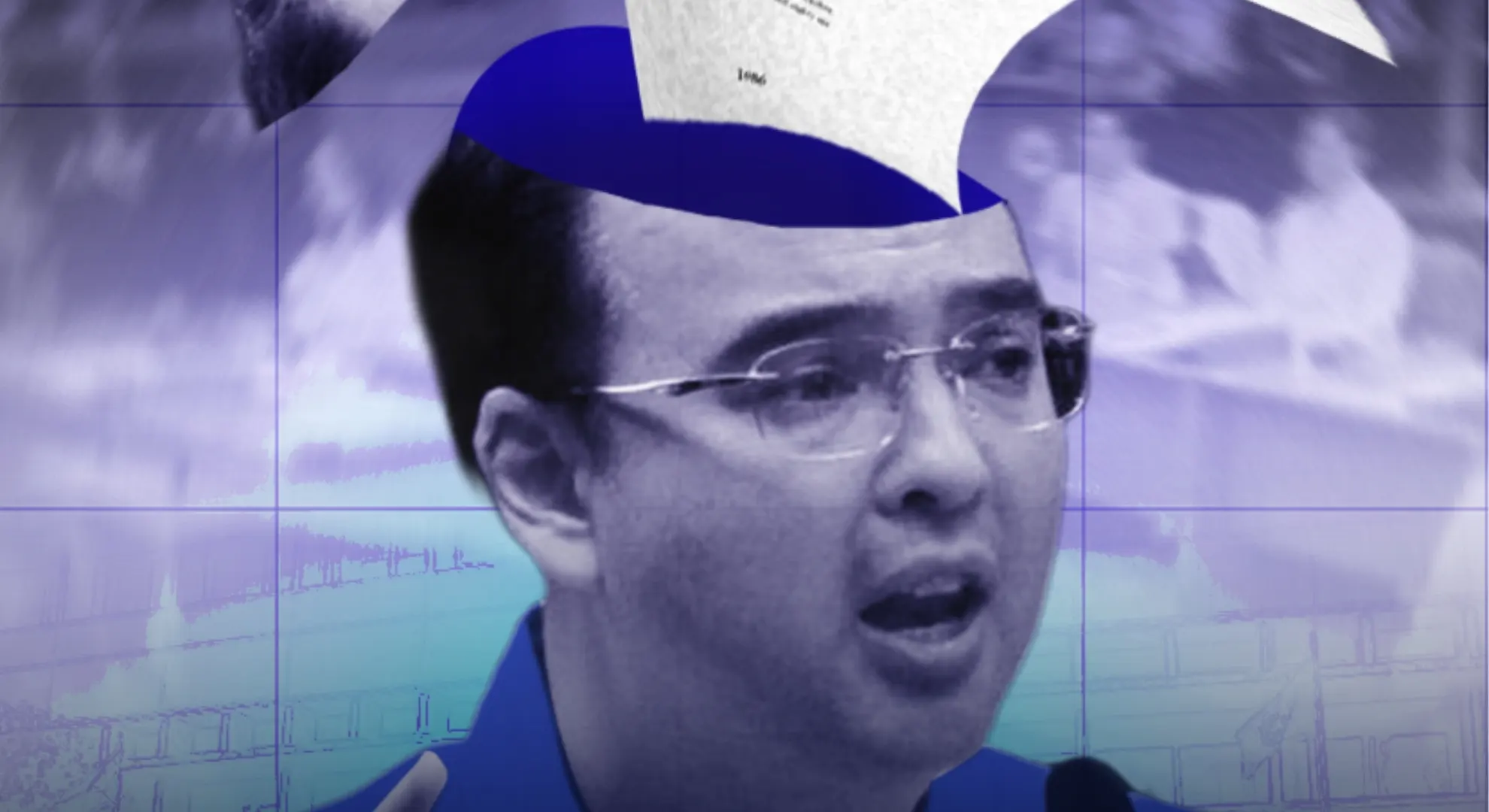
Before the impeachment trial formally began, Senator Alan Peter Cayetano raised a point of order concerning the election of the presiding officer, arguing that the Constitution provided that the Senate President must be the one who presides over the proceedings.
In response to this, Senator Sherwin Gatchalian refreshed his memories that an amendment was made with no objection in the Senate session, as a legislative body, held on the 3rd of June 2026.
Was the Senate Resolution enough to change a long-standing impeachment practice?
WHAT DOES THE CONSTITUTION SAY?
Article XI of the 1987 Constitution establishes the accountability of public officers: covering the impeachment processes, rules, and setting out the grounds of impeachment in case of violations committed by high-ranking officials.
- President;
- Vice President;
- Members of Supreme Court;
- Members of Constitutional Commissions;
- and the Ombudsman.
The Section 3(6) of the article states that the senate has the sole power to try and decide all cases of impeachment while on oath or affirmation.
What does this mean and why is this information important?
Because the Constitution grants the Senate the exclusive authority to decide impeachment cases, it also recognizes the Senate’s authority to adopt procedural rules governing impeachment trials, which can be amended through Senate Resolutions.
Section 3(6) Article XI provides that when the president is in trial, the presiding officer shall be the Chief Justice of the Supreme Court, it does not specify who should preside if the other high-ranking officials are tried. To address this constitutional silence, the Senate Rules of Procedures fill this gap.
WHAT DOES THE RULES OF SENATE SAY?
The Senate Resolution 39 or the Resolution Adopting the Rules of Procedure on Impeachment Trials, specifically, Rule II, states that, “The President of the Senate shall preside in all other cases of impeachment and, for that purpose, placed under the prescribed oath or affirmation by any person authorized by law to administer an oath.”
However, the Senate Resolution No. 48 has amended the cited rule upon adoption on the June 3 Senate quorum. The Senate President is still designated as the presiding officer, “unless the Senate, by a majority vote of the members presents, elects another senator as the presiding officer.”
Does this amendment merely fill a gap left by the Constitution or does it conflict with its provisions?
The Constitution is silent on who shall preside if the official facing impeachment proceedings is other than the president. On the other hand, the senate rules have always been consistent with assigning senate presidents as presiding officers. This raises questions about its legitimacy.
Needless to say, Senator Cayetano has confused the Constitution’s provisions to the Senate Resolution No. 39, Rule II.
PREVIOUS IMPEACHMENTS
•Joseph Estrada (ousted following the EDSA II uprising) - Supreme Court Chief Justice Hilario Davide Jr.
• Ombudsman Merceditas Gutierrez (resigned before the impeachment trial started)
•Chief Justice Renato Corona (impeached) - SP Juan Ponce Enrile
•COMELEC Chairperson Andres Bautista (resigned before the impeachment trial started)
It is quite unusual for another senator to be the presiding officer over an impeachment trial as the previous ones, for non-presidential officials, had always been the senate presidents. The Senate Resolution No. 48 marks the first time the rules expressly allowed another senator to assume the role through a majority vote.
Who presides over an impeachment trial may seem like a procedural detail, but it raises important questions about constitutional limits and the Senate’s rule-making authority.
While the Senate has the power to adopt and amend its impeachment rules, those rules cannot conflict with the Constitution. The Constitution remains the supreme law of the land.
In previous impeachment trials, the presiding officer were always the Chief Justice of the Supreme Court, if the defendant was the president, or the Senate President, if the defendant were other high-ranking officials.
Vice President Sara Duterte’s trial marks the first time in Philippine history that the presiding officer was not the Senate President, but another senator was elected through a majority vote.
Who presides over an impeachment trial may seem like a procedural detail, but it raises important questions about constitutional limits and the Senate’s rule-making authority.