
Political scientist argues campaign finance reform should take priority over another anti-dynasty law.
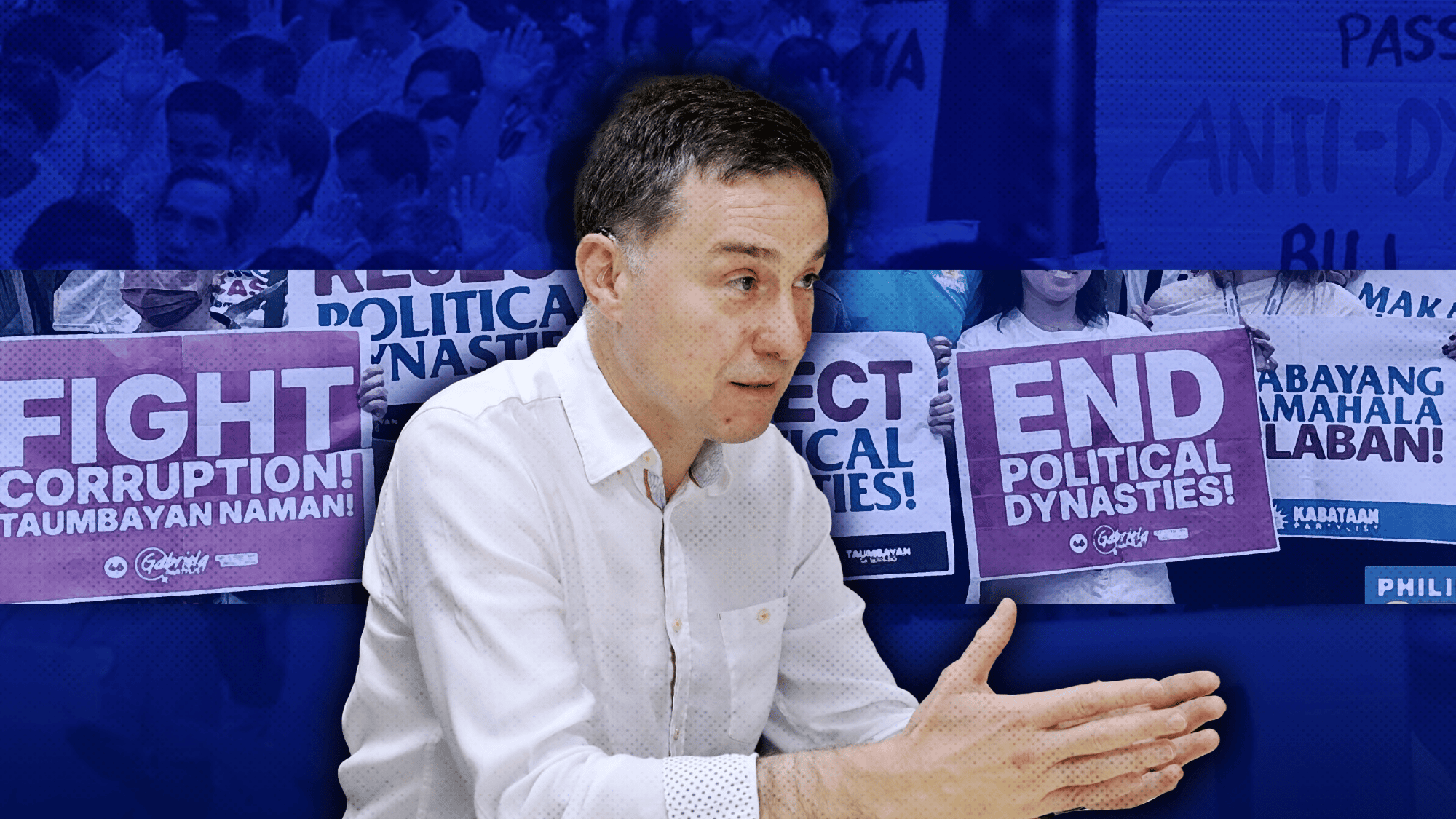
Dr. Fernando Casal Bértoa, Associate Professor of Comparative Politics at the University of Nottingham, said banning corporate political donations is one of the most significant reforms lawmakers could pursue while strengthening political parties through a more transparent financing system.
”Corporate donations, for example, should be banned,” Bértoa said, arguing that corporations contribute primarily to protect business interests rather than broader public interest.
He added that allowing corporate donations undermines the democratic principle of “one person, one vote” as business owners can donate both personally and through their companies.
”Democracy is based on the principle of one person, one vote. When you are allowing the owner of the corporation to donate twice: as an individual and through a corporation,” he said.
Bértoa believes strengthening political parties through a transparent financing system would be a more effective long-term solution than focusing solely on banning political dynasties.
”If you have strong political parties, you are also tackling the problem of dynasties. You don’t have to pass a law to go against the dynasties. You just create an institution that, with time, is going to change the behavior.”
Under the Omnibus Election Code, corporate political contributions are not completely prohibited, but rather only bans contributions from specific entities, such as government contractors, public utilities, franchise holders, foreign corporations, and other prohibited donors listed under Section 95.
Meanwhile, the Commission on Elections (COMELEC) requires candidates and political parties to disclose campaign contributions and expenditures through Statements of Contributions and Expenditures (SOCE), with updated disclosure rules implemented for the 2025 elections.
Bértoa also said the Philippines has one of Asia’s least institutionalized political party systems, characterized by frequent party switching, mergers, splits, and personality-based politics.
”The Philippines is among the least stable,” he said, referring to his comparative research on political party systems across Asian democracies.
He noted that democratic institutions take decades to develop and described the Philippines’ democratic system as “a work in progress.”