
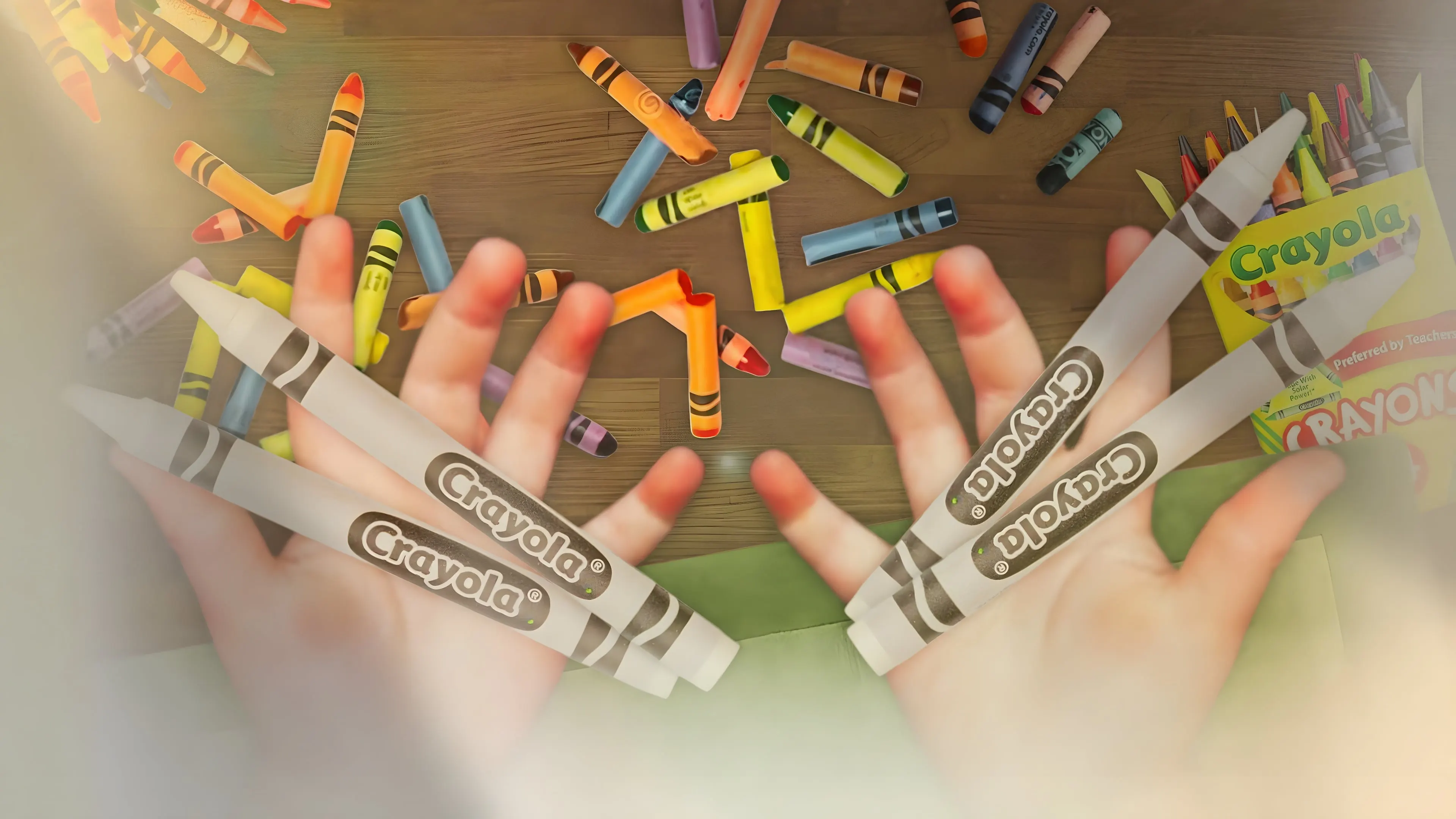
We often overlook the white crayon. In a box full of vibrant reds, blues, and greens, it sits quietly, often dismissed as “useless” or “boring.” It’s just white, people say it’s plain, invisible on white paper, lacking the boldness of other shades. But maybe we’ve misunderstood it. Maybe the white crayon holds a deeper truth, one that mirrors the quiet purity of children.
Children, like the untouched white crayon, begin their lives as blank canvases, the unmarked, unshaded, full of light. Their laughter rings with sincerity, their joy is uncomplicated, and their hearts are free from the weight of the world. They play outside with muddy shoes and sun-kissed cheeks, unaware of the complexities that adulthood will bring. In their innocence, they are radiant, sparingly simple, yet profound. Just like the white crayon, they are often underestimated, yet they hold the potential to illuminate everything they touch.
But as time passes, the white crayon is eventually used. It blends with other colors, sometimes subtly, sometimes dramatically. It no longer appears as it once did, its pristine whiteness now tinged with reds of anger, blues of sadness, yellows of joy, and greens of growth. And just like that, the child begins to change too. Experiences, emotions, and relationships leave their marks.
The purity doesn’t vanish—it evolves. It becomes layered, textured, and nuanced. Some might say the white crayon is ruined once it’s mixed. That it’s lost its essence. But that’s not true. It’s simply adapting, finding its place among the spectrum. It’s learning how to coexist, how to contribute to the bigger picture.
Similarly, a child’s soul doesn’t lose its purity, it absorbs life, becoming richer and more complex. The innocence remains, tucked beneath the layers of experience, shaping a person who is not just good, but deeply human. In the end, the white crayon is not useless.
It’s fundamental. It’s the light that makes other colors shine brighter. And children, in their untouched state, are not just simple beings; they are the beginning of every masterpiece. Their journey from purity to complexity is not a loss, but a transformation. And in that transformation, there is beauty beyond measure.