
Whether lying in bed, walking through the streets, sitting inside a classroom, or riding home after work, information has never been closer to humans.
With a few taps on a screen, questions become answers instantly. Artificial intelligence writes, search engines retrieve, and short-form videos explain. Waiting for information now feels like an inconvenience due to the speed people have been used to.
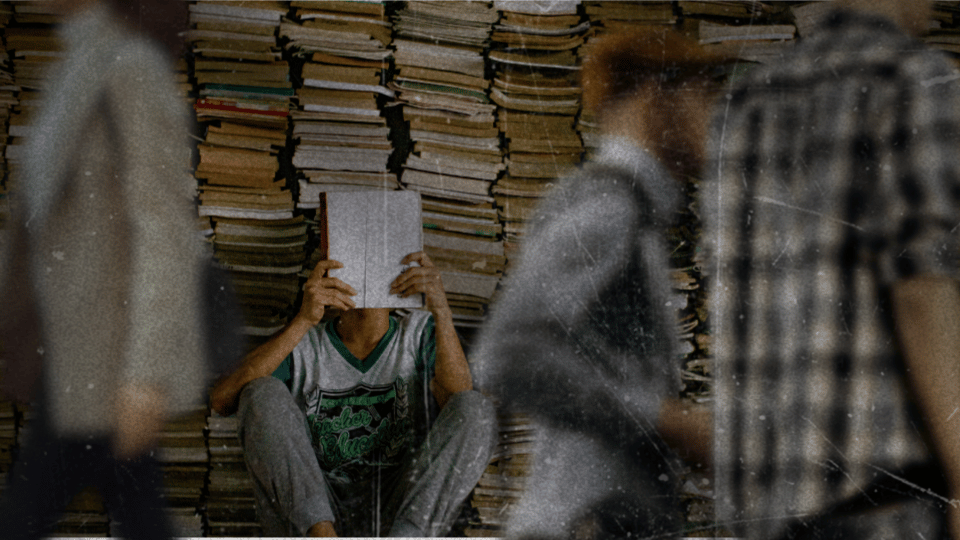
However, somewhere in the rise to know anything in a click, the understanding of information has quietly faded. People spend more time consuming and scrolling through information than comprehending and reflecting on it.
As the world moves faster, only a few places allow and encourage people to actually slow down. Libraries are one of them, yet they remain one of the most overlooked public spaces in the country.
For some Filipinos, the word ‘library’ still brings to mind rows of dusty books and strict silence, but the space has long outgrown that image. It has quietly evolved into a hub where people do more than just borrow books.
Today, students see libraries as a place to pull all-nighters before examinations. Researchers pore over its archives looking for a valid resource. Groups collaborate and work over wide tables. Others simply open their laptops, connect to public Wi-Fi, and work in silence.
Sometimes, libraries serve as breathing spaces where one could disconnect from the constantly noisy outside and reconnect with their thoughts. In today’s society, people don’t just go to libraries to find information, but also to find calmness.
Libraries have adapted to the way people live today, not by resisting technology but by embracing it. Many have also rebranded from being called a ‘library’ as an ‘information center’ or ‘resource hub.”
Ironically, while libraries have continued to change, public attention has shifted elsewhere as more and more spaces presented themselves with the same adapted purpose of libraries.
Coffee shops have become study spots that offer food, drinks, and more. Coworking spaces have sprung up, acting as offices for those who work remotely. These places are not chosen merely because of trends, but because they are more visible and inviting than the public libraries available.
Access remains as one of Philippine libraries’ biggest challenges. Under Republic Act 7743 or Public Libraries and Reading Centers Act, every congressional district, city, municipality, and barangay should at least have at least one library or reading center. This amounts to a target of 43,987 reading hubs.
However, according to the National Library of the Philippines’ June 2025 report, only 1,770 libraries are established and operational–just 4% of what is enacted by the law.
Even the libraries that do exist, their conditions are not conducive for their communities. A study conducted by Estrillo-Suaga et al. (2021) in Iloilo City found that the 11 municipal libraries in the area reported the same issues: inadequate funding, limited collections, and a shortage of professional librarians.
Libraries never left, yet the access they needed slowly faded. Library demand also did not change. In fact, people came with new objectives and purposes. It is the number of libraries and qualities of such that fail to accommodate those who seek them.
What Filipinos seek is a third space that is free and welcoming—and libraries have always had the potential to become exactly that.
In this age of rapid information and individualism, libraries create one of the few spaces where strangers quietly share the same purpose: to learn. People may enter with different intentions, yet under one roof, they become part of the same community built on curiosity, learning, and understanding.
A space to slow down and read also promotes literacy in all aspects. According to the 2024 Functional Literacy, Education, and Mass Media Survey (FLEMMS), 24 million Filipinos cannot understand what they read, while 5.8 million cannot read or write at all.
Libraries cannot solve it in a single reading, yet they offer the space to hone both of these necessary skills and more. They move people away from endless scrolling and toward deeper engagement with ideas that demand time, patience, and reflection.
The shelves of libraries also carry the works of Filipino authors whose stories may never trend on online platforms, but continue to preserve Filipino heritage and deserve to be rediscovered by future generations.
A community space that offers freedom of access to information seems like an improbable concept with the country’s current circumstances, yet this vision is slowly taking shape across the Philippines.
Pasig City has recently reopened its renovated Pasig Knowledge Center, transforming the traditional library with updated facilities and modern equipment. In Ormoc City, Leyte, the Traveling Library brings books into a route of public spaces, making reading accessible beyond the walls of a building
Meanwhile, in Kalinga, Mountain Province, the Tiny Library project has been put into motion led by the villagers of Magmag-an. Using local materials from forests and funds from book sales, they aim to complete a hub that promotes progress while preserving Kalinga culture.
These initiatives prove that libraries are not relics of the past, but isolated success stories are not enough. The Philippines still needs more well-funded, professionally managed, technologically equipped, and genuinely accessible to the communities they serve.
The world will continue to move faster and information will definitely become more instantaneous, but knowledge is never measured by how rapidly it is found, but how deeply it is understood.
And to truly understand the world, there must be libraries that remind us to slow down and take our time.