
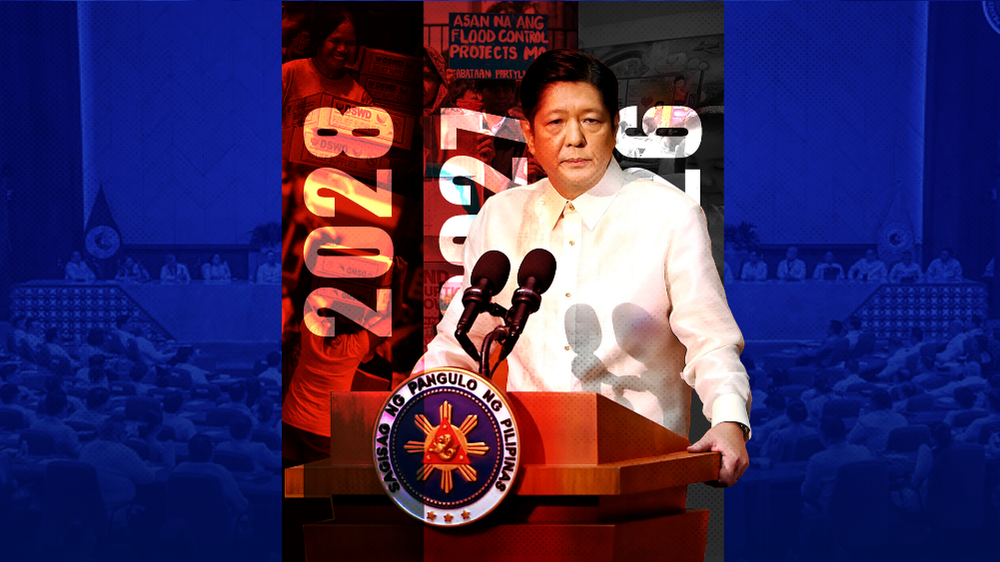
In his penultimate address to the nation, President Ferdinand Marcos Jr. knew the issues Filipinos wanted him to address and the urgency of delivering critical government responses. His fifth address showed how the administration has responded to these crises: surging electricity costs, fuel price shocks, unemployment, education, and corruption stemming from flood control.
The President offered targeted tax relief, cash assistance, and new investigations and audits, and called on Congress to amend laws to cut costs for families.
Let’s take a deep dive into the concerns Marcos addressed, partly addressed, and left out in his 2026 SONA.
Agriculture and Agrarian Reform
Highlighted was the production of farms and fisheries with government support in the form of capital, equipment, training, and insurance coverage.
“Kaya mula noong 2023, patuloy na tumataas ang produksyon ng bansa. Lumalakas ang cropping intensity, dumadami ang ani, tulad ng palay, mais, asukal, baboy at manok. Dala ito ng malakas na buhos ng suporta sa sektor, ang gumaganda at lumalawak na sakop ng imprastraktura at sistema ng irigasyon, at tumataas na antas ng mekanisasyon,” he said.
(Starting from 2023, the country’s production continuously increases. The cropping intensity is strengthened, crops like rice, corn, sugar, pork, and chicken also increased. This is caused by the strong support poured into the sector, the betterment and wider scope of infrastructures and irrigation system, and the higher level of mechanization.)
According to Marcos, the government has provided 145 rice processing systems, three large-scale cold storage facilities, and 40,000 units of farm machinery, with the Department of Agrarian Reform (DAR) distributing more than 400,000 land titles covering 500,000 hectares to beneficiaries from 2022 to 2026, and promised to complete the agrarian reform beneficiaries’ debts. This comes as Marcos signed the New Agrarian Emancipation Act (R.A 11953) in 2023, where P57.55 billion was condoned in unpaid principal amortizations, interest, and surcharges for over 600,000 agrarian reform beneficiaries.
Anti-corruption
The President began his speech focusing on combating corruption, speaking about the impending cases against a former Speaker regarding their alleged ties to flood control projects.
“Hindi ako pangulo ng aking pamilya, hindi ako pangulo ng aking kaibigan, ako ay pangulo ng Pilipinas at ang tungkulin ko ay sa inyo, ang aking mga kapwa Pilipino.”
(I am not the president of my family, president of my friends, I am the President of the Philippines and my responsibility is to you, my fellow Filipinos.)
This allowed him to draw a clear line between his role as president and his family ties. The speech did have its limits on accountability, providing audits, a Transparency Portal, Integrity Chain, and civil society monitoring of Department of Public Works and Highways projects.
Affordability and poverty
Prices of basic commodities were front and center, and Marcos sought to address this in his speech. He credited fuel subsidies for drivers, financial assistance, KADIWA centers, the “Benteng Bigas Meron Na” program, which provided affordable rice to more than 12 million Filipinos nationwide, and increasing tax exemptions for middle-class workers to P350,000 in annual income. He called on Congress to reform the Electric Power Industry Reform Act (EPIRA) to remove system loss charges and value-added tax on system loss charges from being passed on to consumers.
The recent minimum wage hike of P85 for Metro Manila was slated to take effect on July 25, but as of August 4, a temporary restraining order issued by the Pasig Regional Trial Court on July 30 led to the suspension of the wage hike.
The president touted the Local Government Support Fund, which allocates P58 billion to local government units to help accelerate priority programs such as infrastructure and poverty alleviation.
Marcos aims to assist 3.5 million beneficiaries of the 4Ps and Walang Gutom Program, 1.5 million minimum wage workers who are members of the SSS, and 2.5 million poor Filipinos
These programs and proposals were crafted in response to gut issues for Filipinos: expensive food, high electricity bills, fuel surges, and stagnant wages that struggle to keep up with high costs.
Education
The President highlighted continued government support for teachers by providing gadgets like laptops, microphones, smart TVs, and free mobile data. He also mentioned the personal economic relief allowance (PERA), which provides a monthly allowance of P2,000 for public workers.
Also mentioned in his speech were the administration’s goal of building 16,000 classrooms in 2026 with public-private partnerships in addressing the large classroom shortage, strengthened bullying and emergency response systems (EMS) to combat campus bullying, and the planned hiring of 10,000 school counselor associates.
Advocacy groups pointed out that the President stayed clear of providing concrete plans to reduce administrative burdens and raise salaries for entry-level teachers to P50,000, and full implementation and sufficient funding of the Early Childhood Care and Development System Act and the Inclusive Education Act were not mentioned in the speech.
Major issues in the education system, such as childhood stunting and the learning proficiency crisis, were also not mentioned. According to Education Secretary Sonny Angara, the education sector is expected to get a 2027 budget allocation of above P1 trillion, or the same as in the 2026 budget.
Energy and the environment
The President announced that the country had found untapped reserves of 222 billion cubic feet of natural gas after Malampaya drilling resumed after eight years; this was after the extension of its contract to 2039.
He also pushed for nuclear energy to be in the country’s energy security and to bring down electricity costs for families, promising safe and responsible usage, pointing out that nuclear energy was already being used in medicine, agriculture, water filtration, and recycling.
“Pushing the envelope further, perhaps it is time for us to revisit nuclear energy production. After all, we are already using nuclear energy in the fields of medicine, agriculture, water filtration, and the upcycling of plastic,” Marcos said.
He said that the administration is currently monitoring 200 energy projects with a combined capacity of 10,000 megawatts, with 45 completed, 31 to be finished by the end of 2026, and 124 that are expected to be completed by 2028.
While the environment was not mentioned specifically, the president said that the Philippines had begun efforts to establish hydrogen power plants to achieve energy security.
“Four of the contracts that we have so far awarded are for the production of hydrogen, which is native to our motherland. Hydrogen gas will serve as a back-up fuel for our power plants, especially useful for our off-grid areas. It is also touted as the world’s clean fuel of the future.”
Economic growth, employment, and global competitiveness
Under the Marcos administration, the Philippines is now an upper-middle-income country, but the President chose not to include this achievement in his speech.
He instead focused on investment pledges from private firms, public-private partnerships, and job creation.
Economic growth targets lagged despite the Bangko Sentral ng Pilipinas projecting gross domestic product growth of 5% to 6%, but it only rose by 2.8% in the first quarter.
The controversial Pax Silica partnership with the U.S was heavily discussed and promised to provide good-quality jobs, improve industrial competitiveness, and economic growth. But farmers, environmental advocates, and Indigenous Peoples organizations raised concerns over the power and water demands of data centers, the displacement of families, and mining expansion.
Healthcare
According to the chief executive, the zero-balance billing policy of the Department of Health (DOH) hospital wards was able to help nearly three million Filipinos receive treatment without out-of-pocket expenses, as well as Filipino families using PhilHealth, rising from more than five million in 2022 to 7.5 million last year.
“Mula sa lagpas limang milyong pamilyang Pilipino na gumamit ng PhilHealth noong 2022, umabot na sa mahigit pito at kalahating milyong pamilya na ang nakatamasa ng mga benepisyo ng PhilHealth nitong nakalipas na taon. Lahat ng ito ay gawa ng ating masigasig na paghikayat, maayos na proseso ng pagrehistro, at mas pinabilis pang pagbayad sa mga ospital at healthcare providers.”
(From approximately five million Filipino families that used PhilHealth last 2022, the number of families that receive the benefits of PhilHealth has reached 7.5 million this past year. All of these are the cause of our enthusiastic encouragement, smooth registration process, and faster payment to hospitals and healthcare providers.)
Also highlighted was the PhilHealth GAMOT Program of providing annual medical benefits of up to P20,000 that covers 75 essential medicines at 2,000 accredited facilities. The PhilHealth YAKAP Program expands medical tests and illness interventions, and plans to cover treatments such as cancer, heart disease, HIV/AIDS, and tuberculosis.
Sovereignty and peace
President Marcos ended his speech by defending the country’s sovereignty with the 2016 arbitral ruling and the United Nations Convention on the Law of the Sea, vowing to use all peaceful and legal means to uphold it.
“Let me remind our friends and our detractors: Filipinos are a noble, kind, gracious, and great race. We are not greedy. We are not racists. We are not liars. We are respectful, and we are dignified. We are Filipinos, and we do not yield.”
He commemorated the Armed Forces, the Coast Guard, and Filipino fisherfolk who continue to operate despite repeated Chinese presence, though he did not mention the country by name.
“We give honor to our Armed Forces, the Coast Guard, and even our fisherfolk, who all continue to patrol and ply our seas, though fraught with risks. To them we owe collective gratitude and appreciation, for they give life to the letter and spirit of the Arbitral Award. Mga kapwa kong Pilipino, sa ganitong mga banta sa ating seguridad, sa loob at labas ng bansa, tayo’y tumindig nang taas-noo at magkapit-bisig. Dahil tayo man ay magkakaiba sa maraming bagay, iisa lang tayong lahi. Tayong lahat ay Pilipino.”
(We give honor to our Armed Forces, the Coast Guard, and even our fisherfolk, who all continue to patrol and ply our seas, though fraught with risks. To them we owe collective gratitude and appreciation, for they give life to the letter and spirit of the Arbitral Award. My fellow Filipinos, with these kinds of security threats within and outside our country, let us stand firm and work hand-in-hand. Because even though we are different in many things, we only have one race. We are all Filipinos.)
What was left out
Illegal Drugs - While Marcos had mentioned drug policies in previous SONAs, this time around, he did not mention the administration’s anti-drug campaign or drug rehabilitation measures. The issue of illegal drugs remains a top issue for Filipinos.
Impeachment - Marcos avoided partisan issues like the impeachment trial of former running mate and ally, Vice President Sara Duterte, leaving it for the Senate to decide despite public remarks that Duterte made that were seen as threats to him, First Lady Liza Araneta-Marcos, and his cousin, former Speaker Martin Romualdez.
Broader anti-corruption measures - He did not mention other public officials implicated in the scandal, nor did he announce new accountability measures on a broader scale. Marcos focused more on what the government has done rather than on structural changes to the system to prevent corruption from happening.
Political reform of political dynasties - The issue of political dynasties was not mentioned even though it was one of the priority measures of his administration. A watered-down version of the anti-political dynasty bill, authored by Speaker Faustino “Bodjie” Dy and House Majority Leader Sandro Marcos, passed the House this year but was widely criticized as the bill regulated political dynasties instead of prohibiting them.
As President Marcos enters the home stretch of his presidency, all eyes are on him with Filipinos looking for the government to solve issues that impact their daily lives.