

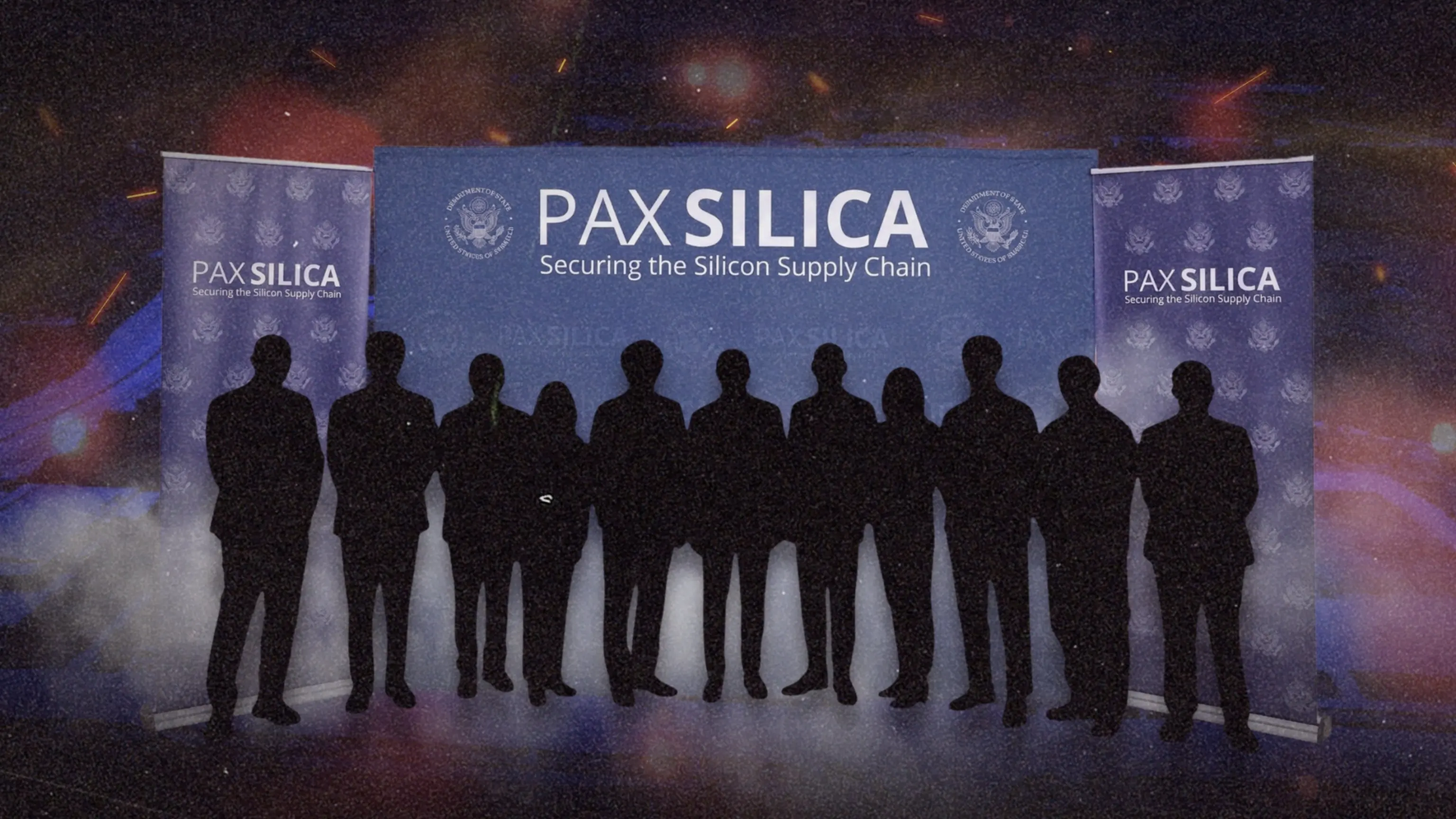
Every generation is offered a promise. Some are wrapped in gold, others in grand speeches. Today, ours is wrapped in silicon.
The Philippine government calls Pax Silica a gateway to the future—a partnership that promises artificial intelligence, semiconductor industries, foreign investments, and economic growth. We are told it will create jobs, modernize our industries, and place the country on the global technological map.
But before we celebrate another promise of progress, we must first ask a question that history has repeatedly taught us never to ignore: progress for whom?
I say no to Pax Silica. Not because I reject technology, innovation, or international cooperation, but because I refuse to believe that development should come at the expense of our sovereignty, our environment, and our people.
First, the agreement raises serious questions about whose interests will ultimately come first. The Philippines has every right to welcome foreign partnerships, but no nation should enter them without ensuring that its own people remain the primary beneficiaries. We have seen too many projects in the past that were celebrated as victories, only for ordinary Filipinos to discover that the greatest rewards flowed elsewhere. We cannot afford another future where we provide the land, the minerals, and the labor while others take home the highest value.
Second, Pax Silica could intensify pressure on our natural resources. Artificial intelligence and semiconductor industries require critical minerals such as nickel and copper—resources the Philippines possesses in abundance. While these industries may attract investment, they could also encourage expanded mining and industrial development that place forests, watersheds, agricultural lands, and indigenous communities at greater risk. A nation that sacrifices its environment in exchange for economic promises may discover too late that no amount of investment can restore a destroyed ecosystem.
Third, there is no guarantee that ordinary Filipino workers will truly benefit. The industries promoted under Pax Silica require highly specialized skills in engineering, artificial intelligence, and advanced manufacturing. Without massive investments in education and workforce training, many Filipinos may remain spectators while high-paying opportunities are filled by a limited pool of specialists. Development cannot be called inclusive if it leaves the majority watching from the sidelines.
Finally, transparency must never be optional. Agreements that shape the country’s economic and strategic future should be subject to public scrutiny. Filipinos deserve to know the commitments being made in their name, the obligations they may carry, and the safeguards that will protect national interests. Trust is not built through optimistic headlines alone—it is earned through openness and accountability.
Some will argue that rejecting Pax Silica means rejecting the future. I disagree. The future is not defined by how quickly we sign international agreements. It is defined by how wisely we protect the interests of the nation while embracing opportunity.
There is nothing patriotic about saying “yes” simply because the proposal sounds modern. Real patriotism asks difficult questions. Real patriotism refuses to exchange long-term security for short-term applause. Real patriotism remembers that technology exists to serve people—not the other way around.
The Philippines does not need progress at any price. It needs progress with principles, innovation with accountability, and partnerships built on equality rather than dependence. Because the greatest mistake a nation can make is believing that every opportunity is worth accepting.
Sometimes, the bravest decision a country can make is to say one simple word—No.