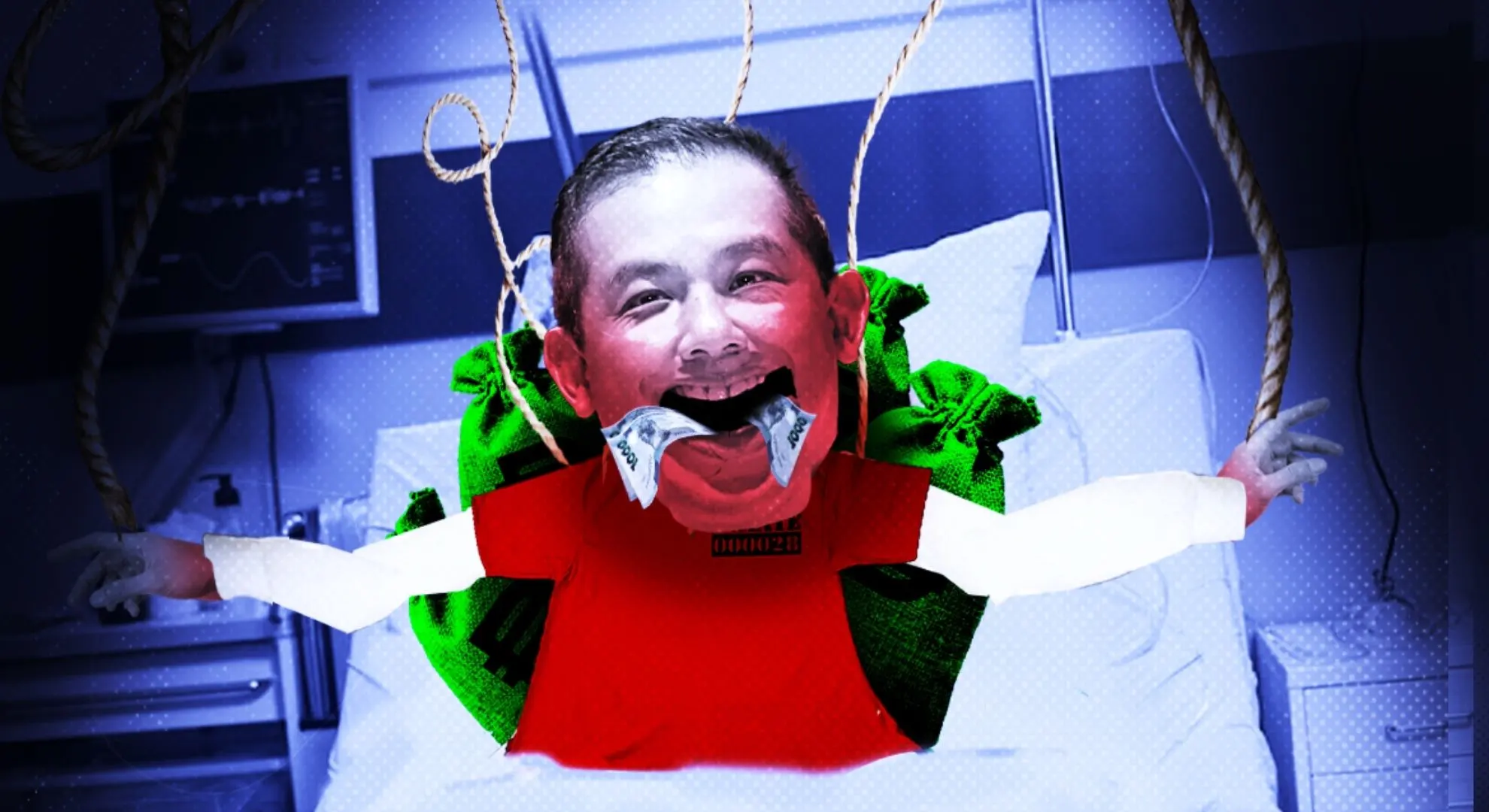


Within a certain kind of unassuming man is a wish waiting to be made, hidden beneath his stammer, his soft eyes, and his silent, simmering longing to be chosen. The “nice guy”, a term coined from Gen Z and Millennial discourse, is an archetype of a man who does not perform kindness out of generosity, but out of expectation. He keeps a mental record of every door held open and every thoughtful text sent, waiting for the debt to be repaid in affection.
He looks like a friend, but his harmlessness is the most dangerous thing about him, because the world has only ever been conditioned to fear the monsters that snarl and never the ones that stutter.
Act I: “Nice” Guy
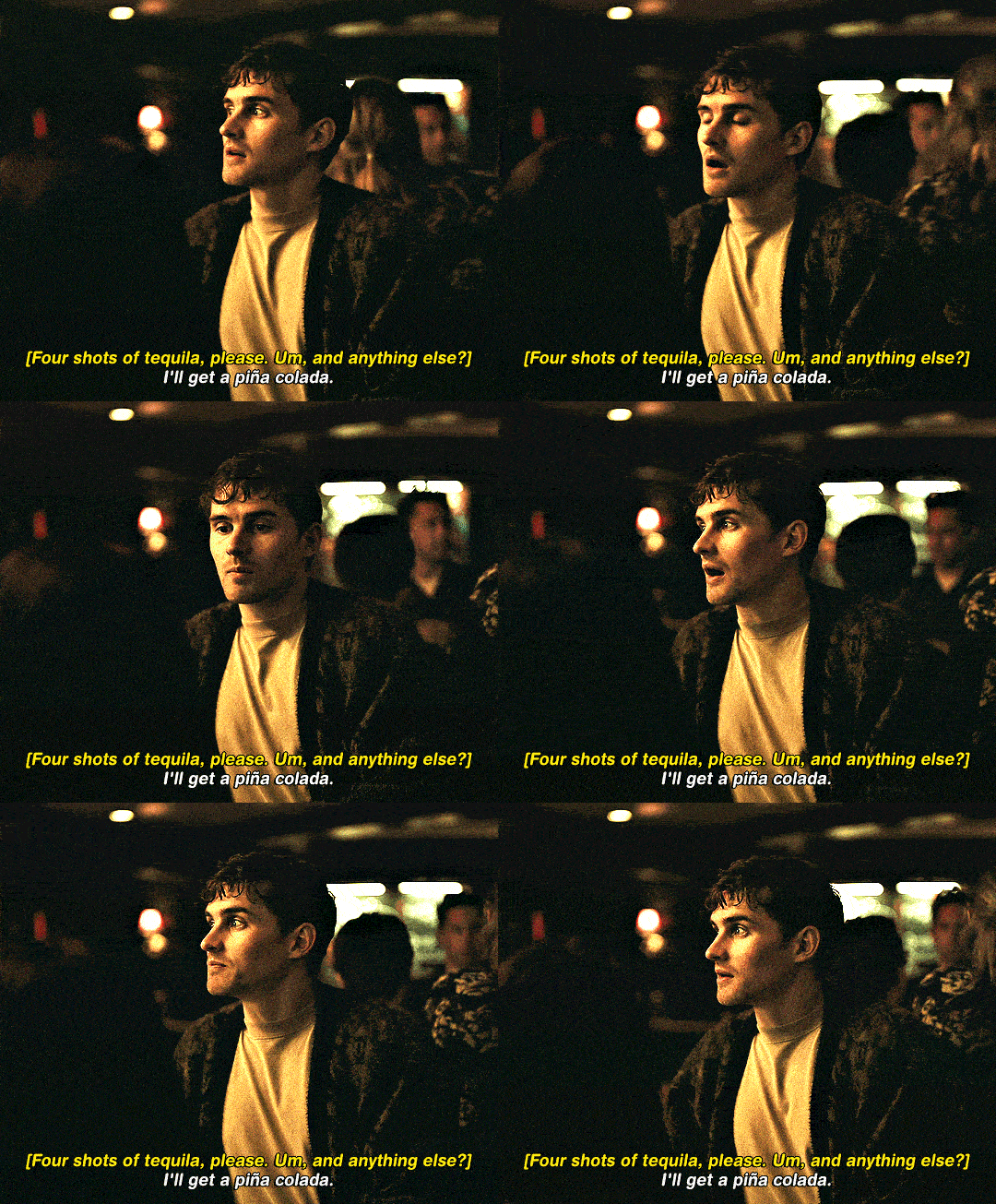
Curry Barker’s Obsession, shot in just 20 days on a micro-budget before Focus Features acquired it for $14 million, captures this depth with Bear rehearsing his love confession on a waitress who is not his crush because the real woman might say no, and he cannot survive a no. Bear is played by Michael Johnston with trembling insecurity that passes for sensitivity. He lives in his dead grandmother’s house, works at a friend’s father’s music store, and has attached his entire personality to the hope of being chosen by a woman he has placed at the center of a fantasy she never agreed to inhabit.
When Nikki’s crystal pendant shatters down a drain, he buys a replacement but stumbles upon a One Wish Willow, a novelty item the clerk warns him about: people who have complained, or died, or wished they did. He intends to give it to Nikki but cannot bring himself to hand it over, so alone in his car, half-joking and half-desperate, he snaps the branch in half, and speaks the words that will unmake everything: “I wish Nikki Freeman loved me more than anyone in the fucking world.”
Initially, Bear did not wish for her suffering. What he wished for was a vision he had been nursing in the dark for seven years: Nikki in love with him, happy and fulfilled, with the two of them building a life together the way he had scripted it in his head. The problem is that the vision was never about her, it was about him and the version of himself he believed he would become if she chose him. “A love only the branch of a willow tree could conjure,” Nikki later says, because what the Willow conjured was never new—like energy, neither created nor destroyed, only transferred. It reflected what Bear already secretly harbored: his own fantasy of mutual devotion and his hunger to be someone’s reason for staying.
That fantasy, as it turns out, was already closer to reality than he knew. Barker himself confirmed that Nikki could have somewhat reciprocated Bear’s feelings before the wish, which makes the shortcut both unnecessary and unforgivable. He could have told her the truth, risked a no, let her choose him freely. Yet he chose the branch instead, because it asked nothing of him but a snapped twig and a whispered sentence, and he had spent his whole life avoiding anything that asked something from him. What the branch gave him in return was not Nikki but a hollowed-out version of her, and Inde Navarrette, in what Sight and Sound called one of the standout horror performances of the decade, plays that hollowing as three women trapped in the same borrowed body.
”I don’t think romance is real,” the real Nikki says before any of this begins. “I think love is real, but not romance. Romance fades. Love is a different thing.” She wanted to write that difference, to capture the good, the bad, the ugly on the page. She tells this to Bear in the car, her guard down, her dreams within reach. She was a woman who knew exactly what she wanted from the world and was reaching for it.
The conjured Nikki duct-tapes doors and builds shrines from dead things because she has no self left to know any better, only the script Bear’s wish wrote for her. Meanwhile, the buried Nikki surfaces in seizures, catching her own reflection and remembering she was a writer before the wish turned her into a character she never auditioned for. She is still there, clawing at the glass, and the horror of the film is not that she became someone else but that she knows exactly who she used to be and cannot fight her way back.
Act II: Glassed Girl
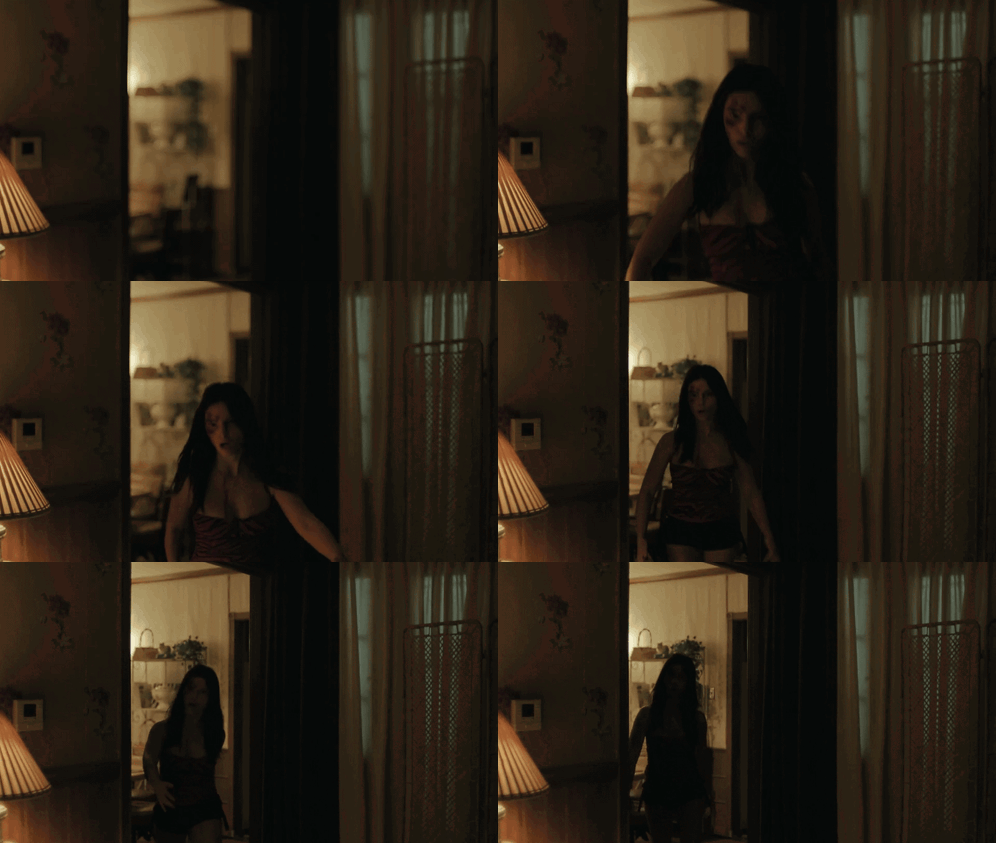
A reflective surface is Nikki’s only weapon: every mirror, every darkened window, every photograph tears a seam in the wish and hurls the real Nikki back into her stolen body. The glass forces her to see what the wish works hardest to erase: herself. She is caged behind her own face, her own features, and every time the reflection ambushes her, she reaches for the only escape left: destroying the body that has become her prison. Communities across Medium, Reddit, Substack, and TikTok have assembled the evidence frame by frame. She surfaces through the dim reflection of a dark TV while Bear sleeps, then screams when she catches her own face mirrored in his eyes during a kiss.
At the party, after reading the Hansel and Gretel story–a truth she could only tell through metaphor that she saw Bear as a brother, never a lover–she locks eyes with her reflection in a glass table, shatters a bottle, and drives the broken end into her own face, screaming “It’s not me!” The blunt glass fails to puncture, causing damage nonetheless, before she switches back to the happy conjured version. It is only after this moment of undeniable violence that Bear finally calls the One Wish Willow hotline, asking not how to free her but how to “alter” the wish, still believing there is no problem with his wish.
However, Nikki’s body does not belong to her anymore. Bear takes her and she lies beneath him with hollow eyes and a face slack, gone blank, her body performing what the wish demands while the real Nikki watches from behind the glass. The conjured entity makes sounds for her, a ventriloquist act of pleasure, and he does not stop, does not ask, because the silence of a woman who cannot say no is the easiest thing in the world to misread as yes. This is not the act of love or even lust, but the final theft of her autonomy.
Tucked beside the food in Bear’s lunchbox is a photograph of the two of them with “not me” scrawled across it in handwriting, which the conjured Nikki could never produce. Her entire borrowed existence depends on being his, so only the real Nikki, snapping back for just long enough, could have left that flare inside the glass. Some viewers theorize the bathroom holds the largest mirror in the house, and she avoids it because the reflection would force her to see what she has become. Others suggest she urinates on the carpet because her body, so violated, has begun to fail her—her bladder giving out after Bear takes what was never his to take, or perhaps another desperate attempt to signal for help by soiling herself. Bear finds her soaked in sweat and vomit, a sickening pool at her feet.
His concern, when he finally looks at her, is not for her suffering but for how gross, how undesirable she has become in his eyes. As the conjured Nikki grows harder to manage, his affection visibly decreases. He begins redirecting his attention toward Sarah—flirting with her in the inventory room, meeting her at the park late at night, opening her college acceptance letter with her while Nikki waits frozen at home in the exact spot where he left her.
Bear does not love Nikki. He loves being wanted, and when one source of validation runs dry, he moves to the next without a backward glance. This is the “nice guy” stripped of his disguise: a man who attached his entire identity to female validation, and when the woman he wished for becomes too difficult to maintain, he simply finds another.
Act III: Man or Bear
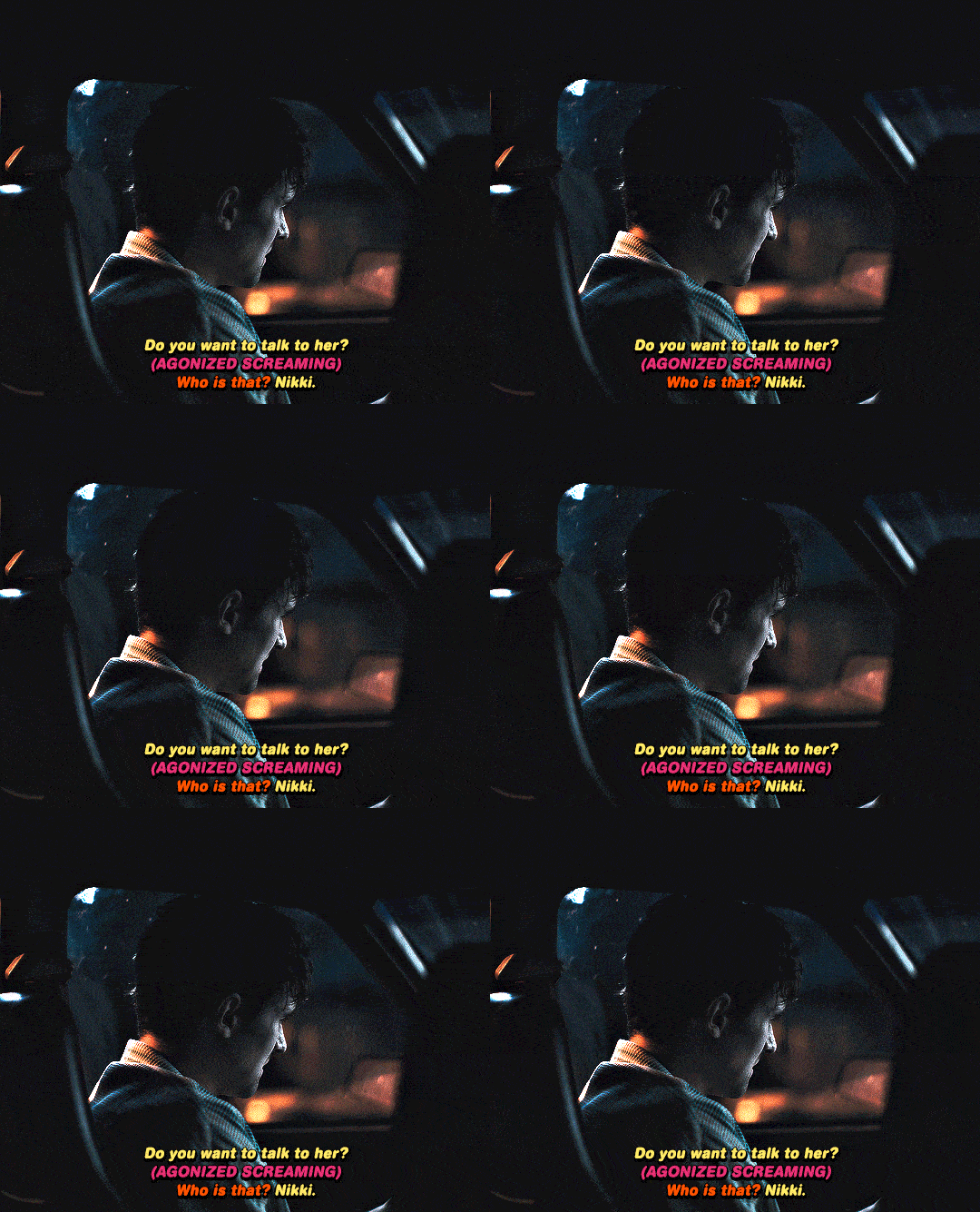
Obsession cuts deeper than most horror films because it does not invent a monster—it holds up a mirror to one already walking around in broad daylight. In 2024, a viral question asked women whether they would rather be alone in the woods with a strange man or a bear, and they chose the bear because it is not safer, but at least honest. A bear does not call its hunger love. Bear, carrying the same name as the creature women trusted more than a man, is the answer to that question made flesh. He is the same man women were warning about: the friend who was never really just a friend.
Nicola Muthurangu-Hall wrote on Substack that Obsession is “a film that uses the darkest analogy for a very real threat: the wish for women to have less agency”. That wish is the manosphere’s entire purpose: a sprawling online ecosystem that teaches men that women’s refusal is a puzzle to solve, and the “nice guy” is its most dangerous yet effective messenger because he does not look like a threat.
Guy Lodge also wrote in Variety that the film is “an interrogation of misogynistic manosphere-era ideals”, and the proof is everywhere: duct-taped doors, shrines made from dead animals, a woman frozen in place because moving would mean she exists beyond him. Bear uses AI twice: to ask a chatbot what MDMA is, and to generate a fake photo of them together; the detail exposes a man who would rather prompt a partner into existence than risk being known.
When the real Nikki claws her way to the surface and begs him to end her, he answers with wounded pride: “What’s so bad about being with me?” In another one of film’s quietest devastations, the real her whispers while the conjured version sleeps, “I’ve never been with you, Bear.” He never hears her. Bear dies to break the wish, freeing the woman he imprisoned, abandoning her to face the wreckage alone, and men still watch him and see the victim.
Every man who has ever believed his desire was harmless still thinks his wish would have been different, that his love would have saved her instead of erased her. But he cannot save anyone until he learns to save himself from the emptiness he keeps trying to fill with someone else. The Willow never truly breaks, because the men who reach for it never learn to break the pattern first.