
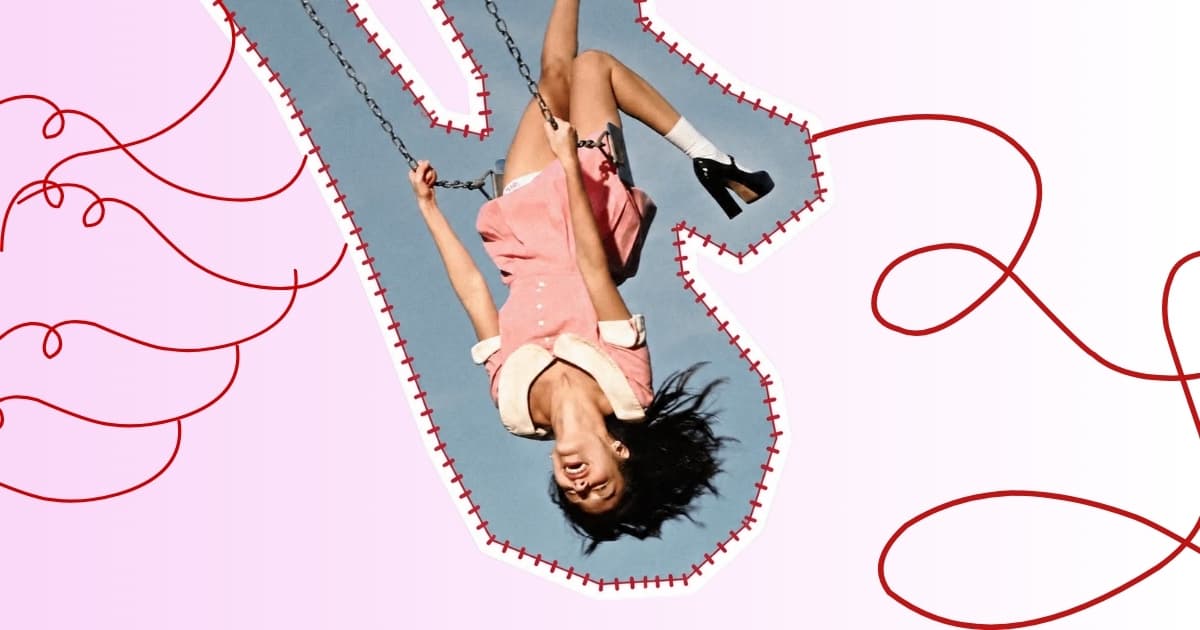
Here is a mantra I have come to believe in: that to stitch a broken heart back together, it first has to tear itself apart.
Olivia Rodrigo’s the cure is not just merely a “breakup song”, it is about hurting someone you love, and wishing–more than anything–you were the one thing that could fix it instead of breaking it up.
We often stitch ourselves back together to mend what we have already torn, believing that no matter how many times we break, a needle will always find its way through the holes we have made.
The tension, and the desire to heal what you tore open is not entirely distant to pop music. Cinema has been circling this exact ‘ache’ for decades, in stories about people who realize, often too late, that love and harm can come from the same hand.
Below are the films and shows that echo that same tearing-and-fixing, not as a cure, exactly, but as company for it. I am no doctor, so take this as a recommendation, not a prescription.
Eternal Sunshine of a Spotless Mind (2004)
They say human beings begin as blank slates, shaped by memories in both mundane and unforgettable alike.
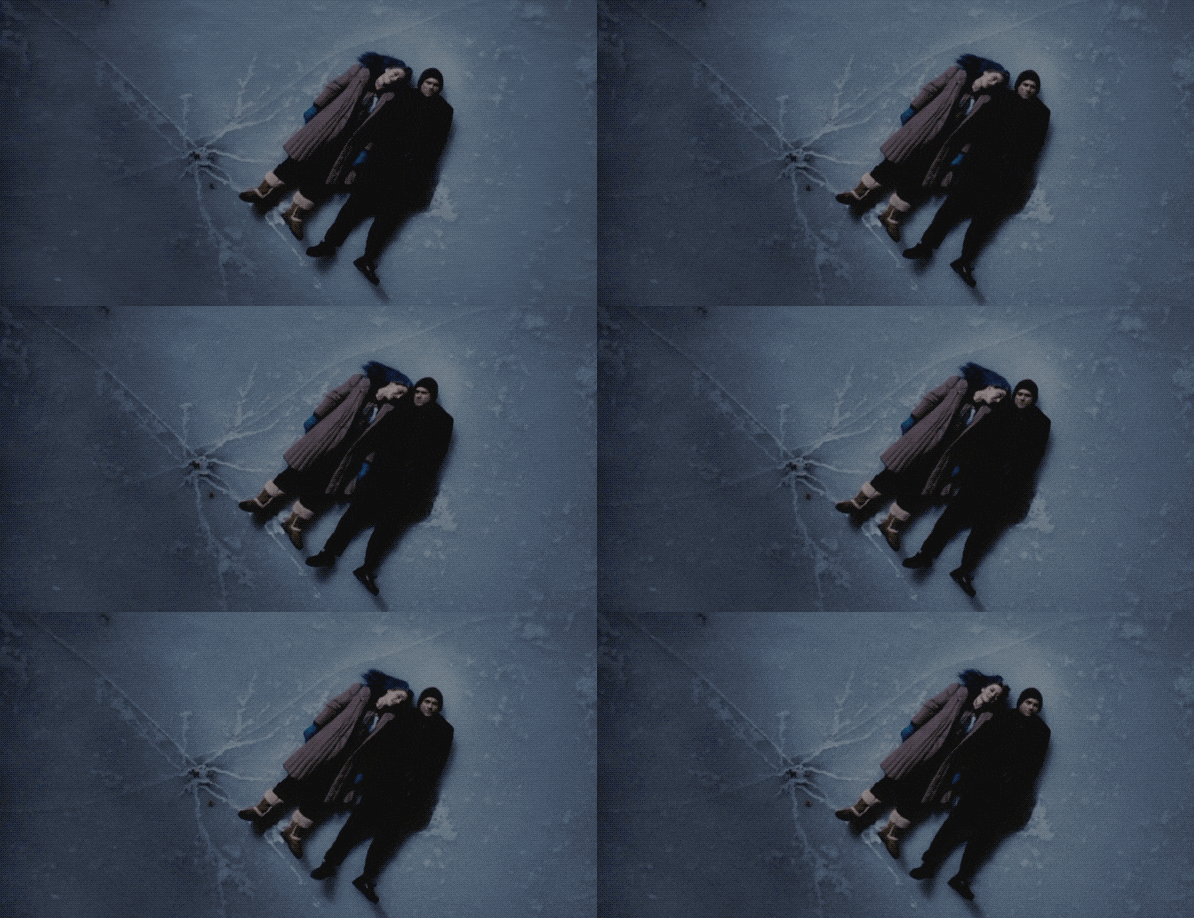
Eternal Sunshine of a Spotless Mind asks what remains of a person when memories are erased.
Picture a plain white canvas with a single dot. You could argue that it is art precisely because the dot exists, but when you strip the dot away, can the canvas still be called art at all?
If Joel and Clementine can scrub every trace of each other from their minds and still find their way to one another, then perhaps the self is not merely the sum of memories, but rather of what lies in both the subconscious and unconscious.
The heart remembers what the mind forgets, some marks do not live in a memory but rather live in the shape of the person that becomes torn and mended enough times.
Little Women (2019)

We set ourselves on the ground, even on one foot so that we can cast our doubts aside. Balance was never the point, at least certainty was.
In Little Women, Jo finds herself exploring the world independently. She writes sensationalist stories to earn a living, and ultimately penning a semi-autobiographical novel mirroring her family’s life.
Then comes her childhood friend, Laurie, who falls in love with her. In an unbalanced, undefended moment, Laurie confesses his feelings to Jo because the not-knowing has become heavier than the risk of finally hearing no.
Surprisingly, Jo rejects his confession, seeing him only as a ‘brother’ for their shared interests. She doubts that she can reciprocate his feelings, and that she tried.
Instead of letting him walk away believing the fault is his, she tells him he deserves someone better suited to him than herself whom she calls homely, awkward, and odd.
It is easy to read Jo’s answer as simple heartbreak, but it’s closer to the same honesty Laurie offered her.
Neither of them lies to protect the other from doubt, they just hand it back and forth until it is out in the open, undressed, with nowhere left to hide.
How to Lose a Guy in 10 Days (2003)
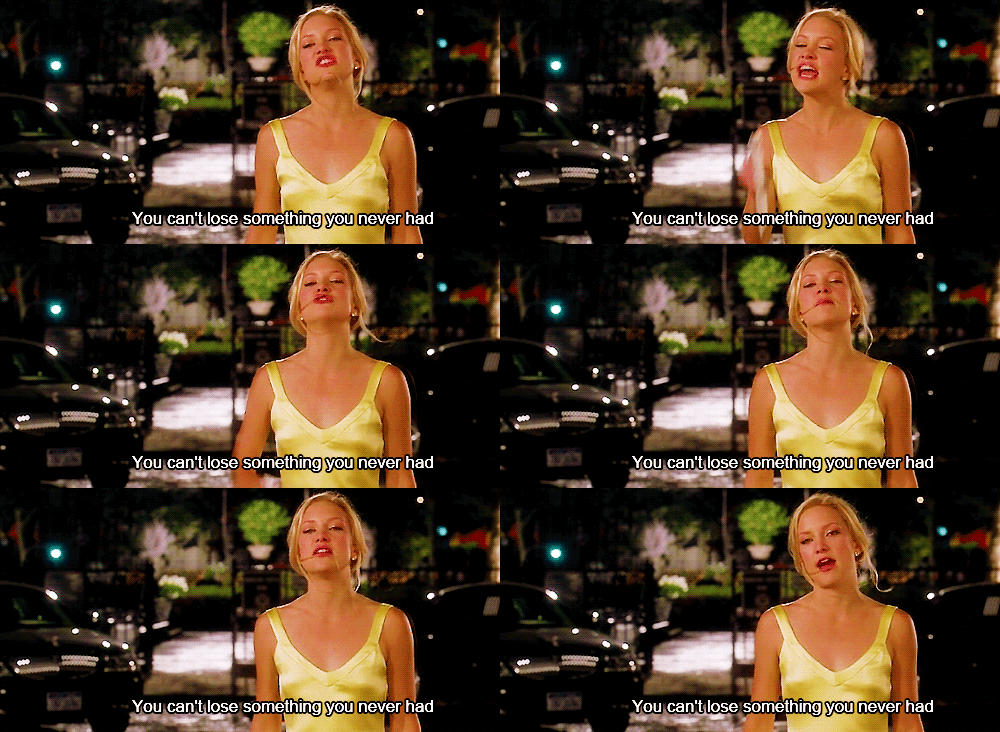
Taking on a gamble is exciting, but if you fail to watch what the cards reveal, you might find yourself becoming the victim of the game. The winner declares victory without hesitation, only to be caught off guard when their opponent reveals an ace up their sleeve.
Only in habits like these can we find ourselves intoxicating, draining each other before we even realize it.
In How to Lose a Guy in 10 Days, Andie and Ben enter their relationship with opposing agendas: one is determined to lose a partner, while the other is determined to win one. The irony on this one is the fact that both are chasing for success, yet both risk walking away empty-handed.
Sometimes, the quickest way to lose someone is to treat love like a game in the first place.
Unlike Jo and Laurie, no one in How to Lose a Guy in 10 Days is being truthful. Andie is running an experiment. Ben is running a bet. Both are performing certainty they do not feel, dressing up their doubt as strategy instead of admitting it as doubt.
Euphoria (2019)
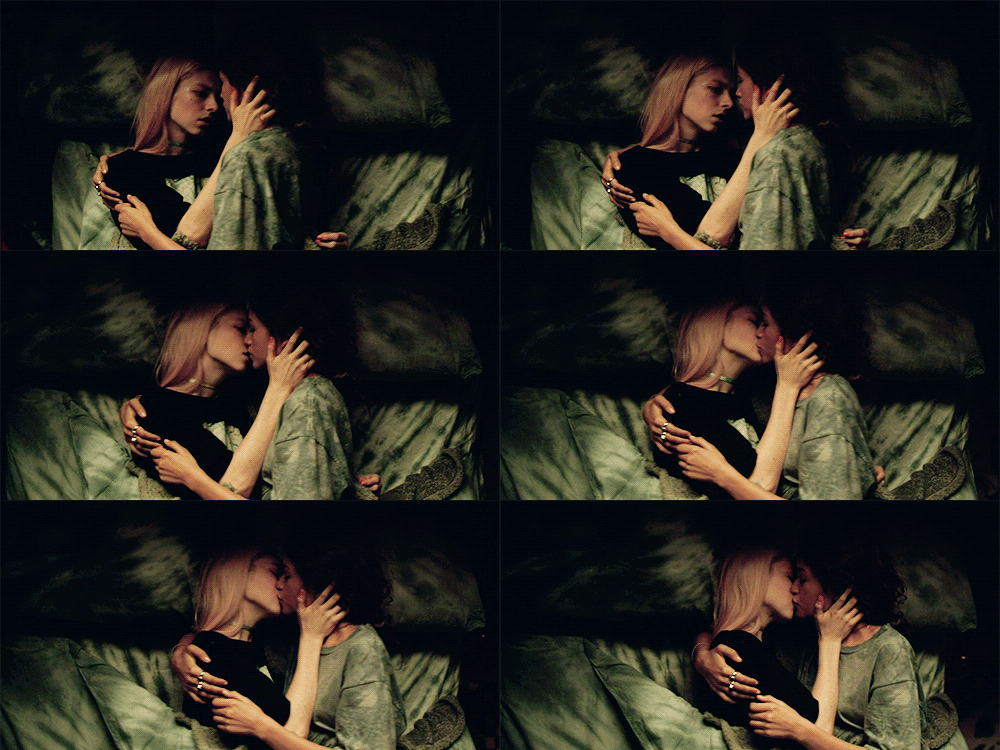
Love should not be immediately prescribed as a medication*.* It can be addicting, especially when used to find ways to cope.
Rue and Jules’ relationship in Euphoria should not be treated as such. We should not mistake intensity disguised as intimacy, in the way a relationship feels most alive precisely when it is most unstable.
Rue does not fall for Jules so much as she falls for the version of herself that Jules’ attention makes possible, even when that version is not sustainable.
Love that heals, and love that merely distracts can look identical from the inside. Only time, and often relapse can only reveal the true nature of what it actually was.
Rue and Jules never had the chance to find out which one theirs was. Their story ends still tangled in that unanswered question, and maybe that is the most honest thing Euphoria has to offer: not a resolution, but a reminder that some love has to be survived before it can be understood.
Maybe that’s the cure
Olivia Rodrigo never promised a cure in the song, only the wish for one. That is the thread running through all four of these: Joel and Clementine, Jo and Laurie, Andie and Ben, as well as Rue and Jules; none of them get healed through the relationship, but rather, they become honest, and sometimes not even that. The tear comes first, always. The stitching, if it comes at all, is just what is left of two people trying anyway.
Maybe that’s the closest thing to a cure any of us can get: not the absence of damage, but the willingness to keep reaching for the needle