
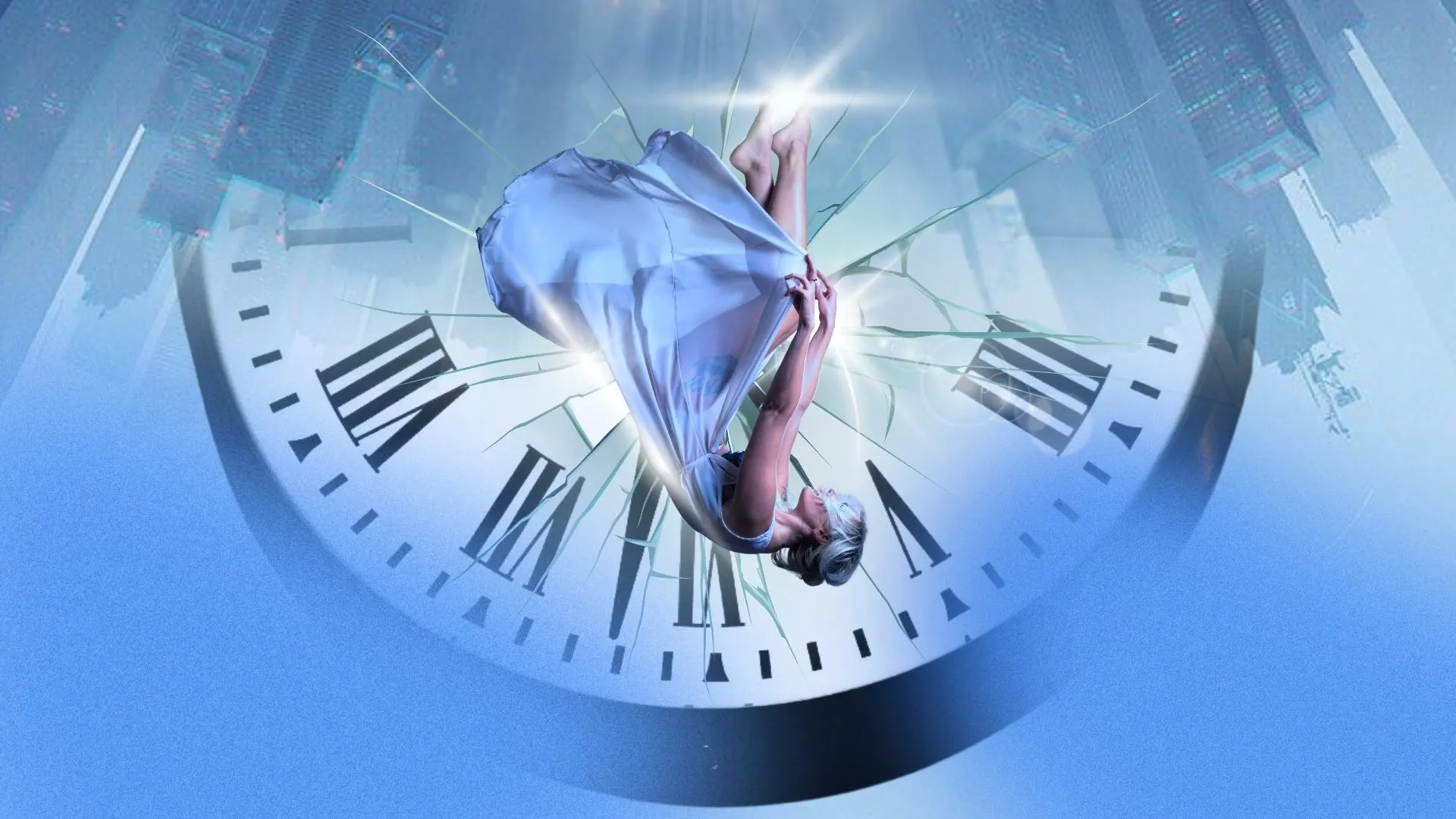
Time does not move the way it used to, surging rather than ticking the moment a screen lights up and refusing to slow until the eyes finally close at night, the seconds between a notification and the impulse to check it having collapsed into something nearly imperceptible. Hours that once stretched long enough to hold boredom now fracture into fragments, each one filled before it can even breathe, and everyone has felt the day slip through their fingers without remembering a single moment of it. Built by algorithms that profit from attention and a culture that has come to equate idleness with laziness, this is the new system.
What the years in lockdown revealed about time was that it could be dissolved entirely, screens replacing classrooms and the boundaries that once separated work from rest, learning from leisure, and morning from midnight, evaporating into a single unbroken stretch of availability. On 2019, Li and Cao found in their study on life pace and temporal reasoning, people in faster, more crowded cities tend to feel time moving toward them rather than moving through it themselves—a cognitive framing that, the researchers argue, accumulates in the slow erosion of the ability to feel time passing at all. The lockdowns, in effect, replicated that urban compression for everyone, collapsing temporal distance until all hours felt equally present and equally empty.
Stimulation has become involuntary while reflection has become optional, a shift that health psychologist Grace Tworek explains in plain terms: “Sensory overload happens when input from any of your senses—sight, sound, taste, smell—feels overwhelming and triggers a physiological response.” This is the daily experience of waking to an alarm, checking notifications before the feet touch the floor, and arriving at work or school already saturated with information the brain has not had time to process. The cruelty of modern existence is in its speed: children grow, elders die, dreams fade, and careers shift while people are still blinking at the screen, the pause that used to allow for love or a simple understanding of one’s own heart having vanished into the current that carries everything else away.
Slow living and minimalism have surfaced as responses to this acceleration, though their truest expressions have little to do with the aesthetics that social media has attached to them. Architect Vittoria Mawis writes that minimalism is no longer just a trend, but has evolved into a lifestyle, while Rose Anne Jade Bumanglag frames the shift in terms of time rather than objects: “I want to take my time and enjoy the present moment, the way I am enjoying writing this, because I am already grateful now.” This is a refusal to measure time solely by what it produces, insisting instead that it must also be measured by what it holds—the bend of a river noticed momentarily, but felt for eternity.
What makes reclaiming time so difficult is that the brain adapts to high stimulation by recalibrating its baseline, constant novelty and instant rewards lowering the drive for slower, deeper pursuits. Rhys Keller describes the trap: “People chase bigger and bigger reward signals, only to discover those experiences rarely produce genuine connection, fulfillment, or purpose.” The activities linked to long-term well-being—faith, relationships, mastery, presence, and patience—demand something modern life has trained people out of giving: sustained attention that does not ask for a reward beyond the act itself.
Boredom, long treated as an enemy to be eradicated by entertainment and endless scrolling, turns out to be one of the few remaining spaces where the mind can encounter itself without mediation. The Internet Encyclopedia of Philosophy traces its lineage through Pascal, who believed that human beings without diversion are confronted with their own emptiness, through Heidegger, who argued that profound boredom strips away illusions and opens the door to authenticity; and through Bertrand Russell, who claimed that “a certain power of enduring boredom is essential to a happy life.” The ability to sit with emptiness is the soil in which creativity and self-knowledge grow.
Every day presents the same choice: the choice to pause before the screen demands the eyes, to ask whether the direction of a life was chosen or simply carried forward by the current. The paradox of modern life is sharp: the digital world connects souls across centuries and delivers art in seconds, but the same speed devours patience and the small acts that once gave texture and emotion to a life. To exist without awareness is to drift in a river without a shore, the choice never made once and finished because it must be made again every morning, often before the feet have touched the floor.
Those who make this choice find something that cannot be optimized or purchased: a power in the pause, a courage in the reflection, a tenderness in truly living. Life’s pace will never slow, death will always come unannounced, and the digital world will continue to demand attention. The world may demand speed, but the conscious heart dictates the pace, not by fleeing modernity but by simply choosing, repeatedly, that a life lived on purpose is worth more than a life lived on autopilot. The choice is individual, the choice is daily, the choice is now, and the clock, for once, can wait.