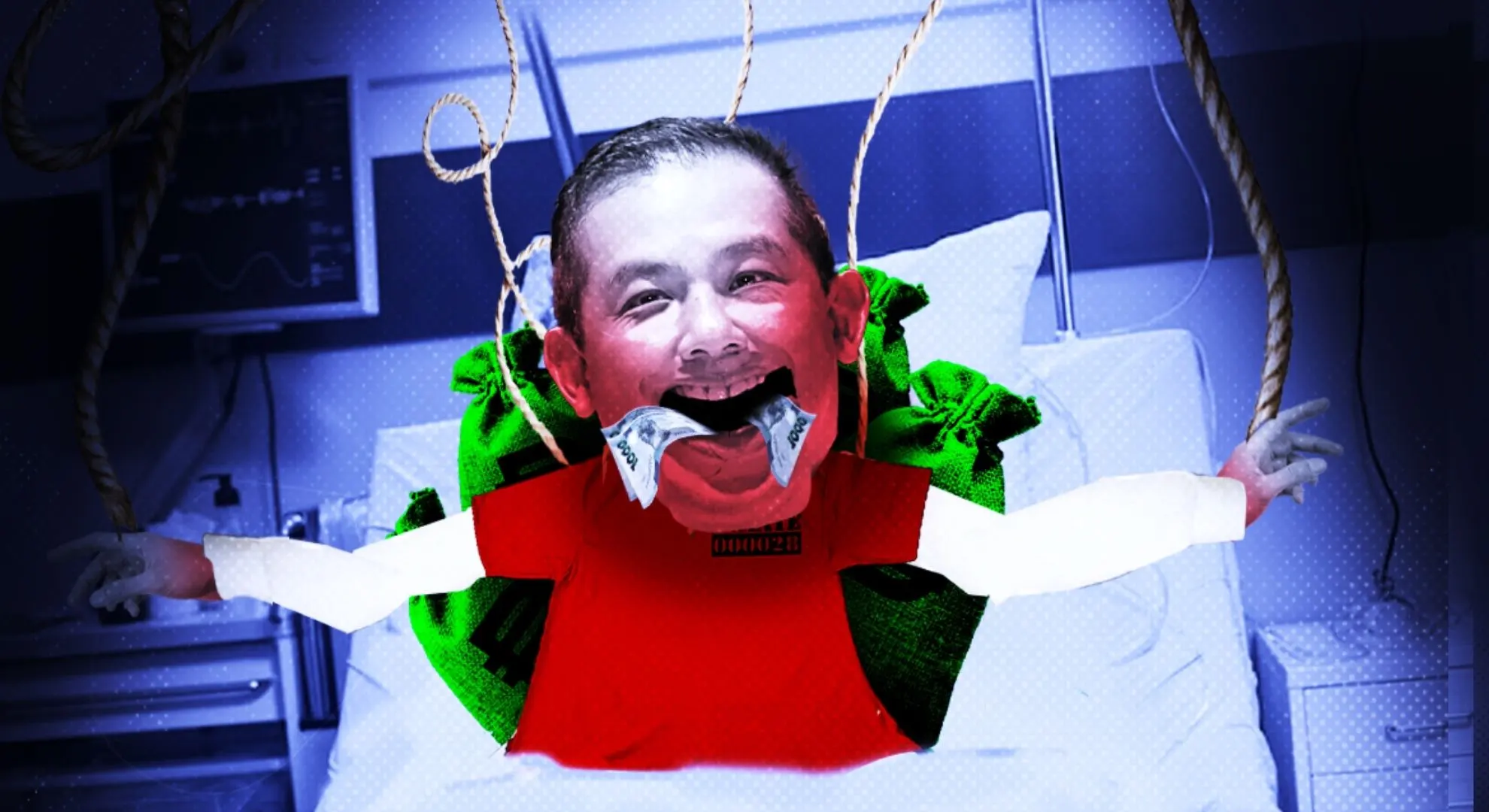

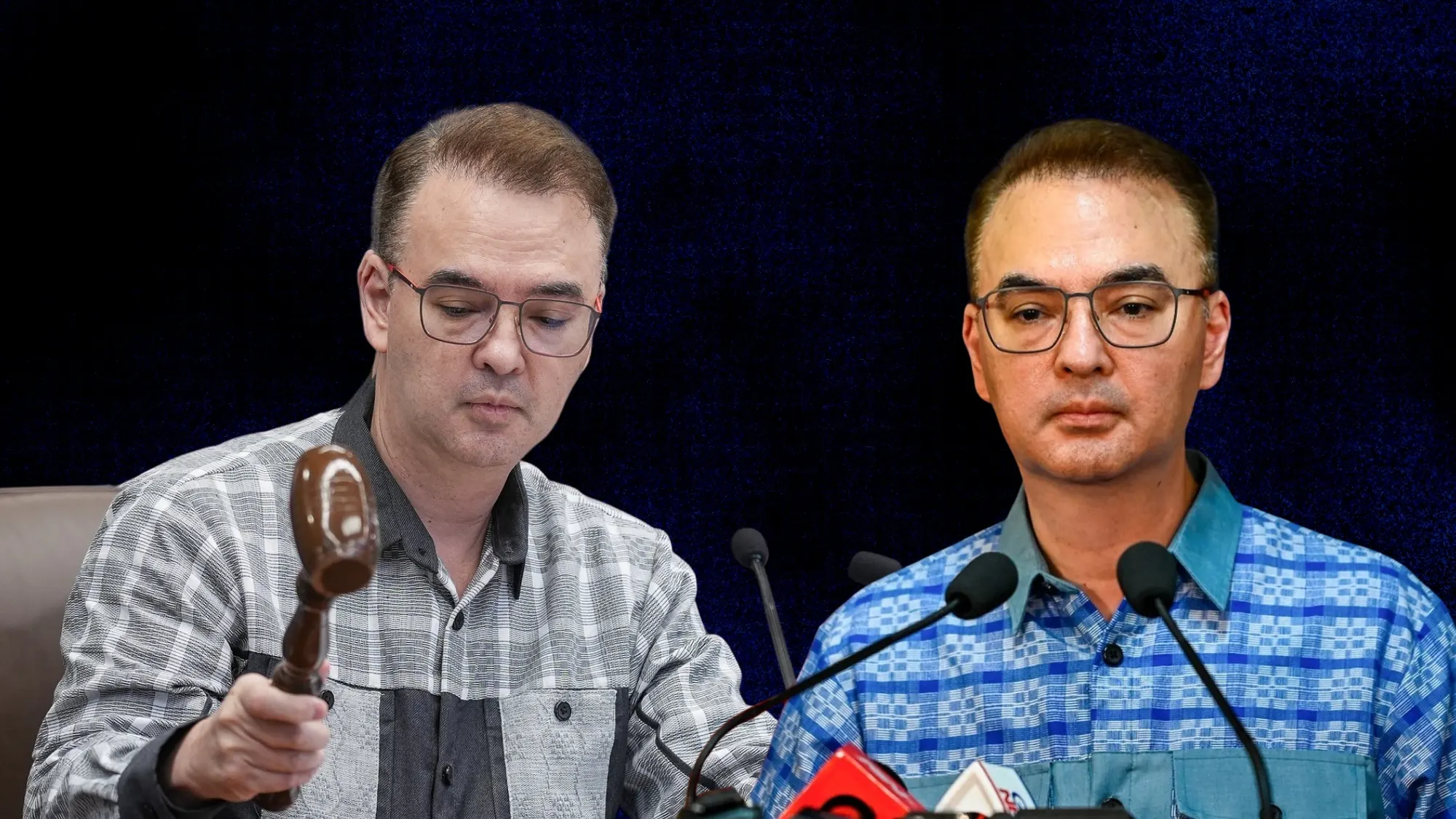
How can one rise from being in the Senate minority bloc, to its highest office, and back again to the minority side? Alan Peter Cayetano, a longtime opposition figure who previously served as the Senate Minority Leader found himself in the center of a power shift when a coalition of senators elected him Senate President. But just a few weeks later, a realignment in the senate stripped him of his position and established new leadership. Now, back in the Senate Minority bloc, Cayetano’s full-circus moment attracted public attention, sparked discussion, and raised concerns about government stability and accountability. In the process, the leadership battle in the Senate became a national conversation about the state of Philippine politics itself.
Who is Alan Peter Cayetano?
Alan Peter Schramm Cayetano earned his bachelor’s degree in political science from the University of the Philippines (UP) and his Juris Doctor degree from Ateneo de Manila School of Law. Born into a political dynasty with his father, Rene Cayetano, a lawyer and later on became a Senator. His sister Pia Cayetano, is also an incumbent Senator, while his youngest brother Lino served as Taguig City Mayor, while the current Mayor is his wife, Lani Cayetano. Mr. Cayetano has deep political ties to the Duterte family: in 2016, he was the running mate of then Mayor Duterte who later on won the Presidency. He has been an ardent defender of the deadly war on drugs by the Duterte administration.
Legislative Positions:
- Senator of the Philippines: (2007-2017, 2022-present) He served in the 16th Congress as Senate Majority Leader from 2013 to 2016 and has had two stints as Senate Minority Leader in the 15th Congress from 2010 to 2013 and again in the 20th Congress from September 2025 to May 2026.
- Speaker of the House (2019-2020): He served as the 26th Speaker of the House of Representatives from 2019 to 2020 in a term-sharing agreement with Marinduque Rep. Lord Allan Jay Velasco.
- Member of the House of Representatives (1998-2007, 2019-2022): Longest serving Representative of Taguig-Pateros.
Cabinet Position:
- Secretary of Foreign Affairs (2017-2018): Cayetano served in President Rodrigo Duterte’s cabinet as the Secretary of Foreign Affairs.
Local Government Positions:
- Vice Mayor of Taguig (1995-1998)
- Municipal Councilor of Taguig (1992-1995): He began his political career at age 21, serving as councilor and majority floor leader of the municipal council.
Key Legislative Accomplishments:
- Republic Act No. 9994 - Expanded Senior Citizens Act
- Republic Act No. 10648 - Iskolar ng Bayan Act
- Republic Act No. 10070 - Amended Magna Carta for Disabled Persons (RA 7277)
- Republic Act No. 12234 - The Konektadong Pinoy Act
- Republic Act No. 12254 - E-Governance Act
Cayetano’s time as Minority Leader
When the 20th Congress opened in July 2025, the Senate majority coalesced around sitting Senate President Francis “Chiz” Escudero. 43 days later, Escudero lost the post due to links with flood control projects. On September 8, 2025, Vicente “Tito” Sotto III replaced him as Senate President. Initially Escudero was chosen for the role of Minority Leader but he declined, giving way to Cayetano, while Senators Rodante Marcoleta and Joel Villanueva were named Deputy Minority Leaders. The old majority became the new minority. Go, Dela Rosa, Alan Peter, Estrada, Marcoleta, Marcos, Padilla, and Villanueva were seen as the “Duterte Bloc” as they had a strong association with former President Duterte and his allies.
As Minority Leader, Cayetano had a strong opposition posture in the Senate. He proposed a snap election and urged President Ferdinand “Bongbong” Marcos Jr. and Vice President Sara Zimmerman Duterte, and members of both chambers of Congress to resign, having no incumbent above to be allowed to run for one election cycle, this drew attention but did not gain traction. From previous reporting, as early as February, then Senate President Sotto said that the majority had blocked an alleged attempt by the minority to remove him as Senate President.
Winning the top post
For some, the third time’s a charm. For Alan Peter Cayetano, the second time’s a charm.
Initially, it was not Cayetano who wanted the post. It was reported that Alan Peter Cayetano favored his sister, Pia Cayetano. Mr. Cayetano thought she was a more palatable, unifying figure. Though former Senate President Chiz Escudero reportedly disagreed with the idea. The minority bloc regrouped and had 14 senators to support a new Senate President and by May 2026, it seemed that the minority had the votes.
At 2:59 pm - a minute before the session began - Cayetano reassured reporters that there would be no change of leadership to stop the impeachment proceedings against Vice President Sara Duterte. 10 minutes later, Cayetano spoke at the podium to inform Sotto that he was going to be replaced as they have 13 senators who wanted him removed from the post. This coincided with Senator Ronald “Bato” Dela Rosa arriving to take part in the vote. After winning the post in a 13-9-2 vote, newly elected Senate President Alan Peter Cayetano said in his first speech that “In every crisis, there are big winners and big losers,” in reference to the economic crisis faced by the country, which has been worsened by the US-Iran war in the Middle East.
Cayetano’s tenure as Senate President
What followed became one of the most turbulent stints in the history of the Senate. Cayetano’s first major act was to receive the articles of impeachment against Vice President Sara Duterte from the House of Representatives. After Dela Rosa returned to the Senate, he was placed under “protective custody” as agents from the National Bureau of Investigation (NBI) attempted to serve an International Criminal Court (ICC) warrant.
Two days after his election, a crisis emerged. After Dela Rosa returned to the Senate and placed under “protective custody”, the Senate went into lockdown where chaos and gunfire broke out in an attempt to arrest Senator Dela Rosa by NBI agents with an ICC warrant for his alleged role as an indirect co-perpetrator with “crimes against humanity of murder” during the deadly war on drugs. Cayetano condemned the shooting as it happened, with him saying that, “This is the Senate of the Philippines. We are allegedly under attack.”
He questioned why law enforcement agencies were in the Senate and without coordination with Senate security. The NBI and Senate security have different narrations on the events on May 13. When asked by members of the media in a press conference on May 14 if the standoff was staged and was a tactic to help Dela Rosa escape, Cayetano lost his cool.
“I don’t think there’s any question, the Senate is under attack…was under attack!” Cayetano said.
Cayetano maintained that the Senate was under attack but Interior Secretary Jonvic Remulla said that “there was no attack on the Senate” based on the investigation that showed that 39 out of the 44 bullet casings were recovered from the Senate. This suggested that most of the shots were fired by Senate security personnel not outside agents.
After a week in the post, calls for his resignation began after the shooting incident occurred inside the Senate. He dismissed the growing criticisms and was used to it, pointing to his time as Speaker of the House and Foreign Affairs Secretary under former President Duterte.
Cayetano’s grip started to weaken, with an already narrow majority, Senators Juan Miguel “Migz” Zubiri and JV Ejercito formally joined the minority bloc after previously labelling themselves as independents. The absence of Senator Ronald “Bato” Delar Rosa further narrowed his present majority from 13 to 12 as he was not physically present in plenary sessions.
Uncertainty
On May 26, Senator Rodante Marcoleta’s motion to allow senators to participate sessions remotely under “justifiable” circumstances was front and center during the session. The minority bloc walked out as they questioned the “rushed” procedure to amend the rules.
“We strongly condemn what appears to be an attempt to rush a major change in the Senate rules, especially when several members of the minority still wanted to speak and raise serious questions on the floor,” the Senate minority said in a joint statement.
“We walked out because what happened on the floor looked less like orderly deliberation. The proposed rule change affects how senators may attend sessions, participate in proceedings and exercise their mandate through remote means, and such a measure should be opened to healthy public debate instead of being rushed by the tyranny of the majority,” they added.
Cayetano himself acknowledged the possibility of a coup despite him only recently winning the post. This comes as members of the minority bloc had floated Sen. Sherwin “Win” Gatchalian as a possible replacement for Cayetano, calling themselves “Solid Bloc 11 or SB11”, and are backing Gatchalian to “restore the damaged image of the Senate”.
Cayetano announced on Facebook Live that he and his majority bloc colleagues would not be attending plenary sessions. A move framed as protecting ongoing Senate investigations but widely seen as a bid to prevent the minority from being able to muster a quorum to oust him. The minority bloc slammed the absences as “What happened today was a clear abandonment of responsibility, a dereliction of duty, and a blatant disregard of the rules that govern this institution, because the Senate cannot be made to stop working simply because its presiding officer refuses to lead.”
Return to the minority
The Senate leadership was prompted by a legislative deadlock and a subsequent change in alliances. The deadlock began when Senator Alan Peter Cayetano and the members of the majority bloc refused to attend scheduled sessions after the arrest of Senator Jinggoy Estrada.
The majority bloc’s margin was further weakened when Estrada could not physically attend plenary sessions due to his arrest on non-bailable charges of plunder and bribery on June 1. The majority and minority bloc’s number was essentially a tie, 11-11. On June 3, Senator Chiz Escudero, a majority bloc member, allowed the minority to create a quorum and elect Senator Win Gatchalian as Senate Pro Tempore and served as acting Senate President, with this, a new majority emerged.
Some did not acknowledge the transition of power to Gatchalian when Cayetano claimed that he was still the legal Senate President. However, in the absence of the former majority group, 12 senators gathered on June 17 and, along with Senator Joel Villanueva, met the 13-seat quorum required to proclaim all leadership positions vacant.
Senator Sherwin Gatchalian sat as the new Senate President, with Senator Vicente “Tito” Sotto as Senate President Pro Tempore, and Senator Juan Miguel “Migz” Zubiri as Senate Majority Leader. Cayetano initially questioned the legality of the new majority bloc, but eventually gave up his claim, officially paving the way for Senator Sherwin Gatchalian. Days after the change of leadership, Alan Peter Cayetano re-took the position of Senate Minority Leader.
The road ahead
Cayetano’s full-circle moment shows how leadership is changing, and how leadership changes can affect the Senate’s direction, given the significant events that occurred within the Senate in his tenure.
Whether it’s leading the majority or representing the minority, each bloc carries a responsibility that supports the Senate’s work and public serving. As the Senate begins its new session next month, the focus now shifts on how they will address national concerns and how the majority and minority bloc will fulfill their duties in influencing legislative action and public accountability.
Senator Ping Lacson described the Senate Presidency as “the most unstable job in the world”, and it turned out to be true. Senator Alan Peter Cayetano’s tenure as Senate President was the second shortest in Philippine history, lasting 23 days.