
I have always believed that a society reveals its true character not by how it treats the powerful, but by how it treats those whose voices are easiest to silence. If that is the measure, then Afghanistan is facing one of the gravest human rights crises of our time.
Imagine being a young girl who dreams of becoming a doctor, only to be told that your education ends at Grade 6—not because you lack intelligence or ambition, but because of your gender. Imagine needing a male guardian to accompany you before you can travel, seek medical care, or simply navigate public spaces safely. Imagine watching parks, gyms, and other communal places become inaccessible to you. More painfully, imagine growing up learning that your voice itself must be restrained.
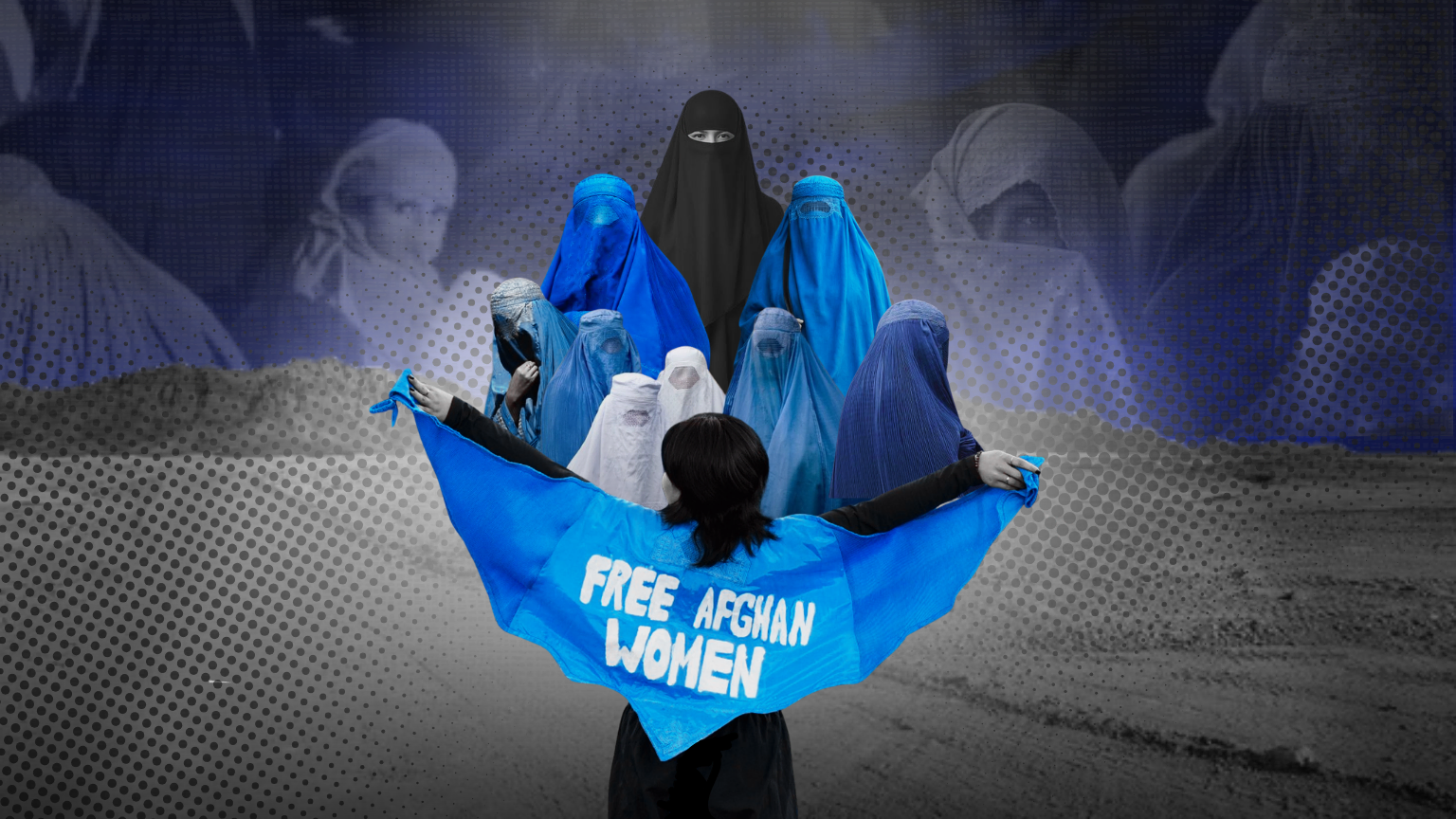
For millions of Afghan women and girls, these are no longer hypothetical situations. Since the Taliban regained power in 2021, Afghanistan has become the only country in the world that bans girls from attending secondary school and university. Human Rights Watch, the United Nations, and numerous international organizations have repeatedly condemned the Taliban’s systematic restrictions on women’s rights, describing them as institutionalized discrimination. What is being erased is not merely access to education or employment—it is women’s human right to participate fully and freely in society.
The crisis against Afghan women demands global attention because it strips them of opportunities that education provides, confines them to dependence through restrictive policies, and normalizes a culture where women are punished simply for existing beyond prescribed boundaries.
First, denying girls access to education steals not only their future but also a nation’s potential. According to UNICEF, Afghanistan remains the only country where girls are prohibited from studying beyond the primary level. Millions of girls have been excluded from secondary education and universities since the Taliban’s return to power. Education is more than literacy; it is empowerment. It equips women to become teachers, scientists, leaders, and innovators. By denying girls the classroom, Afghanistan is not preserving tradition—it is limiting generations of possibilities. A nation cannot truly progress when half of its population is denied the opportunity to learn.
Second, the restrictions imposed on Afghan women reinforce dangerous systems of dependence and control. Human Rights Watch has documented policies requiring women to adhere to strict mobility regulations, often involving male guardianship requirements for travel. Reports have also highlighted barriers women face in accessing healthcare independently. These measures send a devastating message: that women cannot be trusted to make decisions about their own lives. Rights that many people consider fundamental—the freedom to move, to work, to seek treatment—become privileges contingent upon male approval. Dignity should never require permission.
Third, the stories of each woman reveals the human cost behind these policies. The case of Gulnaz, an Afghan woman imprisoned after reporting that she had been raped by a relative, drew international outrage. After years in prison, she accepted marriage to her attacker amid intense pressure and limited alternatives to secure her freedom and protect her child. Her story became a painful reminder that systems often fail women not only through laws, but through cultures that prioritize preserving appearances over pursuing justice. When victims are burdened with shame while perpetrators escape accountability, society teaches women that survival sometimes demands surrender.
The world cannot afford to view Afghanistan’s gender crisis with detached sympathy. Governments, international institutions, and civil society organizations must continue exerting diplomatic pressure to protect Afghan women’s rights. Scholarship programs and humanitarian initiatives should be expanded to support displaced Afghan women and girls. Media organizations must continue amplifying their stories rather than allowing them to fade from public consciousness. Most importantly, people everywhere must recognize that women’s rights are not cultural luxuries reserved for certain societies; they are universal human rights.
I refuse to believe that being born female should determine the boundaries of one’s freedom. I refuse to accept that silence should be mistaken for peace. And I refuse to call oppression “tradition” simply because it has endured.
Because when women are denied education, society loses wisdom. When women are denied autonomy, humanity loses dignity. And when women are denied their voices, the world loses truths that desperately need to be heard.
A nation does not rise by keeping its women on their knees. It rises when every girl is given the chance to stand.