
I have always believed that the most dangerous losses are not the ones we witness, but the ones we learn to describe so gently that they no longer sound like losses at all.
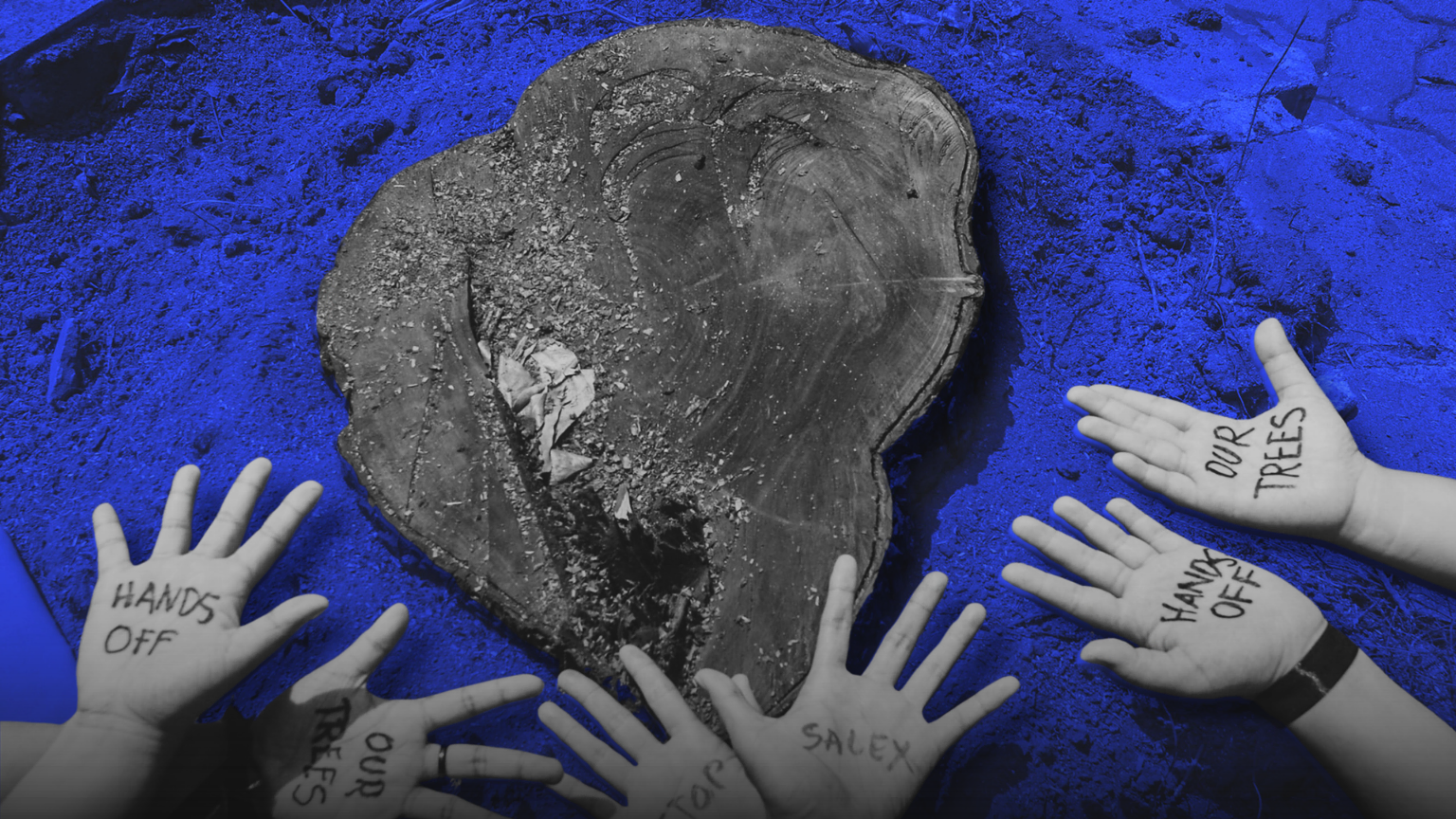
That is why the controversy surrounding the earth-balling of trees along Roxas Boulevard disturbed me—not merely because trees were uprooted, but because of the language surrounding it. Videos of nighttime operations linked to the Southern Access Link Expressway (SALEX) project sparked public outrage and prompted the Department of Environment and Natural Resources to investigate whether contractors violated environmental protocols. Officials spoke of permits, compliance, and “earth-balling.” Environmental groups spoke of destruction. Somewhere between those two narratives lies a question that should trouble all of us:
When did saying goodbye become so easy?
We no longer say trees are being uprooted. We say they are being relocated.
We no longer speak of environmental loss. We speak of development.
We no longer ask what will disappear. We ask what will replace it.
And perhaps that is how grief begins—not with chainsaws, but with euphemisms.
Language has always been humanity’s most powerful tool. It can inspire revolutions, heal divisions, and preserve memories. But it can also soften truths. Technical terms have their place, and earth-balling is indeed a legitimate arboricultural practice meant to transplant trees with their roots intact. Yet, words can become dangerous when they remove us from the emotional weight of what is actually happening. Because behind every “relocation” is a tree that stood for decades. Behind every permit is shade once enjoyed by strangers. Behind every infrastructure project are silent witnesses to countless sunsets, storms, and generations that will never stand in that exact place again.
I am not opposed to progress.
Roads must be built. Cities must evolve. A growing nation cannot remain frozen in time.
But progress becomes hollow when it no longer pauses to ask what is being sacrificed and whether those sacrifices are truly necessary. Development should not require society to become emotionally detached from the things it removes. A permit may authorize an action, but it cannot replace conscience. Compliance may satisfy regulations, but it cannot answer whether we have been responsible stewards of what was entrusted to us.
Perhaps what saddens me most is how easily we have accepted that everything can be replaced.
Cut one tree, plant ten seedlings. Lose one park, build another. Destroy one ecosystem, create compensation elsewhere.
As though life itself obeyed arithmetic.
But a hundred saplings cannot instantly replace the shade of a decades-old acacia. Newly planted trees cannot recreate memories rooted in time. Some things grow not only through years, but through histories. And histories, once erased, do not grow back.
Maybe that is why people were angered by those videos. Not because they oppose roads, nor because they reject progress.
But because, deep inside, they understand something that statistics and permits often fail to capture:
That some losses deserve mourning. That some things should not disappear quietly. That some forms of progress should be questioned, especially when they arrive under the cover of darkness and leave behind explanations instead of answers.
The Department of Environment and Natural Resources has promised transparency and accountability. If violations are found, those responsible must answer for them. But beyond investigations and permits lies a larger responsibility—not only to protect trees, but to protect our capacity to feel their loss.
Because perhaps the greatest tragedy is not that trees fall. It is that we have become so accustomed to losing them that we no longer know how to grieve. And when a society loses its ability to grieve what it destroys, it risks losing something far more important than trees. It risks losing something far more important than trees—its conscience.
Because sometimes, the first thing we uproot is not a tree. It is the truth hidden beneath the words we choose to describe its fall.